How to achieve product-market fit (and actually know when you have it)

Most businesses are closer to product-market fit than they think – and further from it than they’d like to admit. Here’s a framework for closing that gap.
The gap nobody talks about
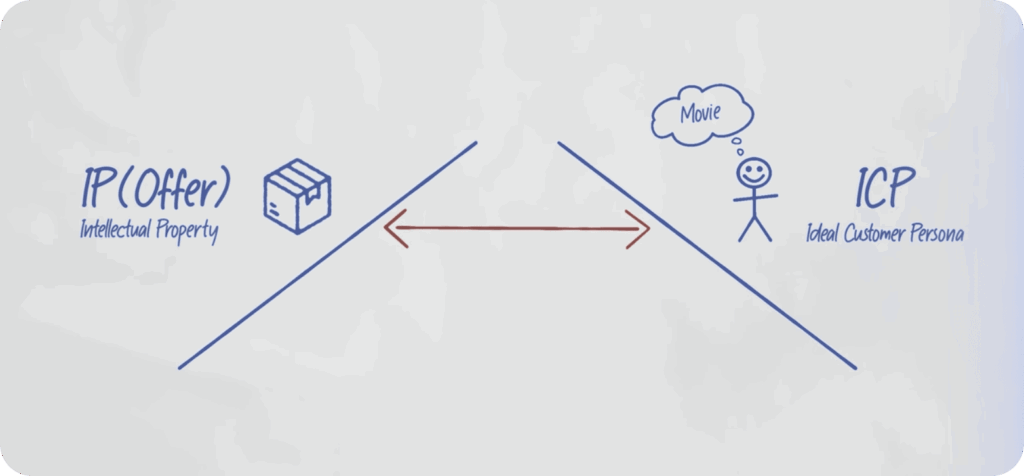
There’s a movie playing in your customer’s head. In it, working with you transforms their business, their results, their life. Everything is better, faster, easier. They’ve finally found the answer.
And there’s a movie playing in your head too. A streamlined business. Scalable systems. Customers who don’t require heroics to serve.
The distance between those two movies? That’s the product-market fit gap. And bridging it is not just about papering over it with clever marketing it’s genuinely one of the most important things you’ll ever do for your business.
According to CB Insights, the number one reason startups fail is building something the market doesn’t want. It’s not bad execution or poor timing and it’s not even a lack of funding. It’s the wrong product for the wrong people.
This isn’t just a startup problem, established businesses struggle with it too and often without even realising it. Their customers are lukewarm and while growth is possible it’s often hard work. Sales require heroics every time.
Product-market fit is the antidote to all of that. And unlike most business concepts, it’s actually testable.
Watch: how to achieve product-market fit
Prefer to watch? The framework in this post is based on this video. It covers the full system – from understanding your ICP to designing your offer and testing for fit.
Or keep reading for the step-by-step breakdown.
What product-market fit actually is
Product-market fit happens when two things come together: the right ideal customer persona, and an offer that genuinely excites them.
It’s not binary. A minimum degree of product-market fit won’t be enough to achieve meaningful traction. What you’re looking for is a high degree of fit – customers who would be genuinely disappointed if your product disappeared, and who’d enthusiastically recommend it to someone in their shoes.
The classic measure comes from the Sean Ellis test: ask your customers how they would feel if they could no longer use this product. If more than 40% say are very disappointed, you’re in strong product-market fit territory. Below that, you’ve got work to do.
You’ll know you’re there when two things happen simultaneously: the customer feels elated they found you, and you feel a little overwhelmed because you’re not quite sure how you’ll scale to meet demand. That tension is a good sign. Scalability comes later.
The entrepreneurial journey – and where this fits
Product-market fit doesn’t happen at the start of a business journey, and it doesn’t happen at the end. It’s the crucial middle step between testing a concept and taking it to market.
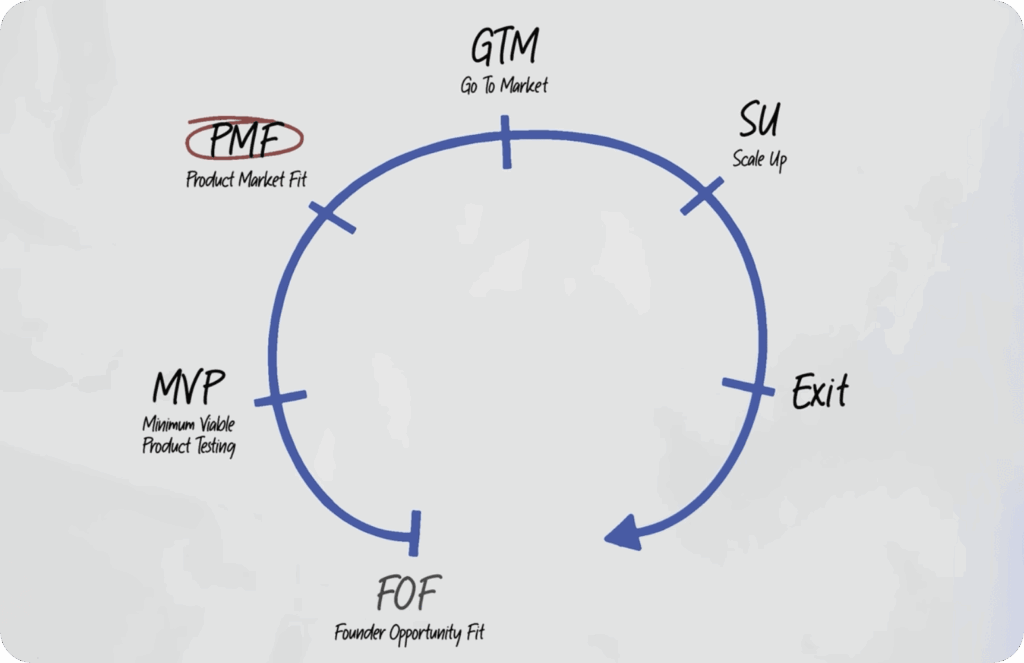
The stages look like this:
- Founder opportunity fit – figuring out what’s a good opportunity for you
- Minimum viable product testing – validating interest with early audiences
- Product-market fit – finding the perfect ICP and the offer they respond to
- Go to market – scaling sales and lead generation
- Scale up – new products, markets, territories
- Exit – selling the business for a life-changing amount
Most founders skip step three, or treat it as incidental. It isn’t. Everything else hinges on it.
The 4 most common product-market fit mistakes
Andy Rachleff, co-founder of Benchmark Capital and Wealthfront, is one of the foremost thinkers on product-market fit. He identifies four mistakes founders consistently make:
1. Prioritizing well-known customers over desperate ones.
“The counterintuitive thing is that you should not go after the big market first. It’s the exact opposite of what everyone tells you.” – Andy Rachleff
The customers most likely to tell you whether your product works are the ones who genuinely need it right now. They’re not always the most prestigious or the easiest to reach.
2. Changing the product instead of the customer.
When something isn’t working, the instinct is to iterate on what you’re selling. But Rachleff argues you should first ask whether you’re targeting the right people. Often the product is fine – it just needs a different audience.
3. Chasing growth before finding value.
Running paid ads, building SEO campaigns, and engineering growth before you have genuine product-market fit is expensive and misleading. Artificial growth can make you think you’ve arrived when you haven’t.
4. Treating it as a one-time achievement.
Markets shift. Competitors emerge. Customer expectations evolve. Product-market fit is a continuous pursuit, not a box you tick and move on from.
One important distinction: product-market fit is not the same as problem/solution fit. Your customers may want a solution to their problem without necessarily wanting your specific product. Don’t mistake early enthusiasm for genuine fit – keep testing.
Step 1: Get inside the mind of your ICP
The first step is data gathering – and it’s the step most business owners skip because they feel embarrassed asking. Don’t be. The best entrepreneurs ask constantly. The five-to-ten-year version of accidentally stumbling onto your ICP is optional.
Here are three interactive assessments you can run today using ScoreApp templates:
Survey #1 – The waitlist campaign
Perfect for: businesses launching a new product, service, or approach.
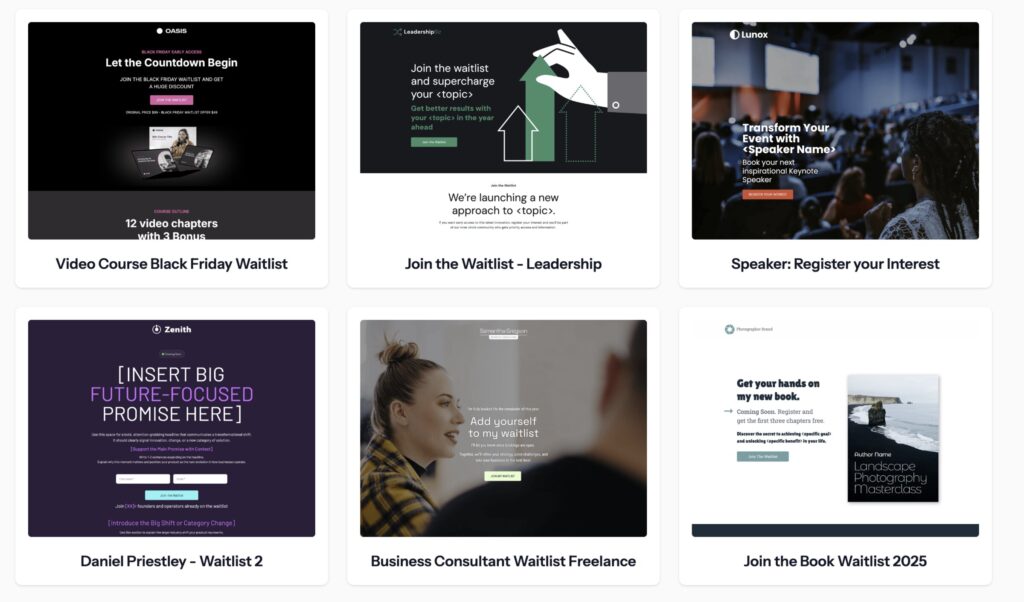
Tell your audience you’re launching something new and invite them to join a waiting list – but instead of just collecting email addresses, ask five questions that help you understand their world:
- Which best describes your current situation? (menu of relatable options)
- What outcome are you looking for in the next 90 days?
- What’s the biggest obstacle standing in your way?
- What type of solution would you be most inclined to engage with?
- Is there anything else you want us to know? (open text)
The data you get back tells you who your best-fit customers are, what they’re willing to pay, and what language they use to describe their own problems. Use it. Use a wait list template →
Survey #2 – The product-market fit survey (Sean Ellis test)
Perfect for: businesses with existing customers.
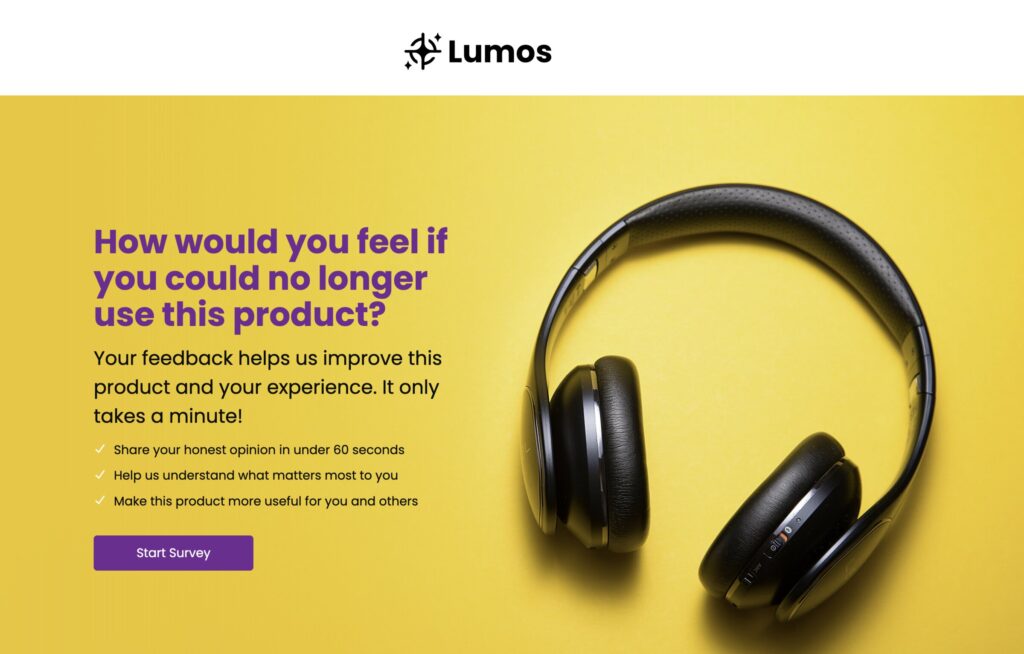
Send your existing customers one pivotal question: how would they feel if they could no longer access your product or service? The options: very disappointed, somewhat disappointed, or they would be fine with it.
The most important group is “very disappointed.” These people are your ICP. Study them. Interview them. Understand exactly what they value and why they rely on you.
For the “somewhat disappointed” group, follow up with questions about what would make them more enthusiastic. These are near-fits you might be able to convert.
You can run two versions of this assessment depending on your audience: Version A → | Version B →
Survey #3 – The experience score
Perfect for: service businesses who want ongoing feedback loops.
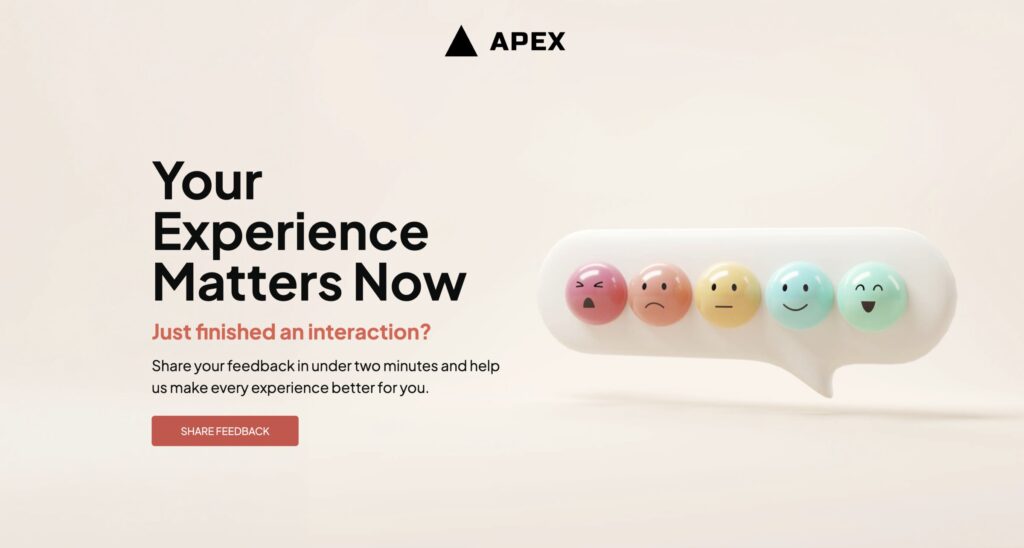
Simply ask: “How would you rate your experience with us today?” Then follow up with a short set of questions: who they are, what outcome they were looking for, what frustrated them, and what would improve their score by one point.
Run this consistently and you’ll build a continuously improving picture of your ICP – one that sharpens your offer over time.
Not sure which template to use, or want to build something tailored to your business? Use the AI scorecard builder → to create your own custom assessment.
Step 2: Radically improve your offer
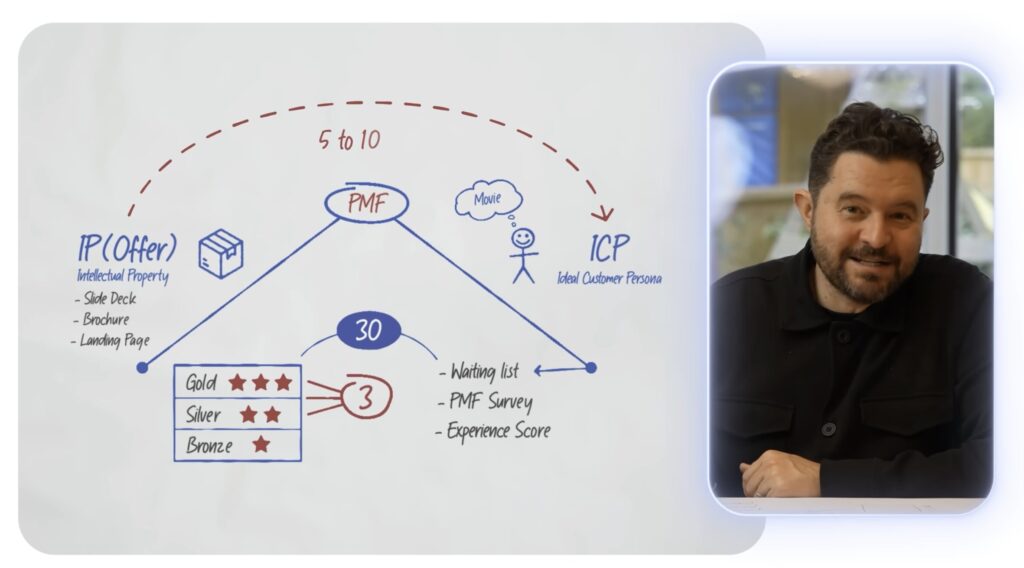
Once you’ve gathered your data, use it to build gold, silver, and bronze versions of your offering.
- Gold: Everything your ideal customers could want – premium ingredients, premium price, healthy margin.
- Silver: Essentials plus a few upgrades. The middle option most buyers gravitate toward.
- Bronze: The core offering at a lower price point. Still profitable.
Then bring it to life visually. 50% of the brain is dedicated to visual processing – people need to see your offer to believe in it. A well-designed brochure, slide deck, or landing page can do more selling than any pitch.
Step 3: Run 30 one-to-one sales conversations
Go back to at least 30 customers – existing or potential – and present your new gold/silver/bronze offer in a real conversation. Walk them through it and ask which option excites them most.
You’re looking for at least three people who commit to silver or gold. Then, 90 days later, ask them the product-market fit question again: would they be disappointed if this disappeared?
If the answer is yes – if they’d genuinely miss it, if they’d recommend it enthusiastically, if your experience score is a 9 or 10 – congratulations. You’ve achieved product-market fit.
Now you can go to market with confidence, knowing you’re not just hoping something lands. You’ve already tested it.
The real reason most businesses don’t do this
It’s not complexity. It’s not time. It’s the emotional barrier.
People feel embarrassed sending out a survey. They think great entrepreneurs just somehow know their ICP instinctively. In reality, the best founders simply ask the questions, gather the data, and let their customers tell them what to build.
Asking for feedback isn’t amateur. It’s professional. And your customers? They love being asked.
The biggest thing standing between you and product-market fit is almost having it. You can bridge the gap with sales heroics. But the goal is a business that doesn’t require heroics. Where your offer resonates so clearly that the right leads show up already warm.
That starts with one question.
Frequently asked questions
Product-market fit is when your offer resonates so strongly with a specific group of customers that they would be genuinely disappointed if it went away. It’s the point where sales stops feeling like pushing water uphill and starts feeling like opening a tap.
The Sean Ellis test is the most widely used measure: survey your customers and ask how they’d feel if they could no longer use your product. If 40% or more say “very disappointed,” you’re in strong product-market fit territory. Below that, you’re not there yet.
Problem/solution fit means customers want a solution to their problem. Product-market fit means they specifically want your solution. The distinction matters because early enthusiasm for the category can masquerade as fit for your product – keep measuring, not just celebrating.
Go to market – the phase of scaling your sales, generating consistent leads, and building the growth engine that product-market fit makes possible.
Yes, but it takes intentional work. The frameworks above – waiting list campaigns, the Sean Ellis test, experience scores – are all designed to help you find fit quickly rather than accidentally over five to ten years.
ScoreApp’s interactive assessments let you gather zero-party data directly from your prospects and customers. You can use the Waiting List Campaign template to understand who’s interested before you launch, the Sean Ellis test templates to measure fit with existing customers, or the AI scorecard builder to create a custom assessment for your specific business.
No. Markets evolve, customer expectations shift, and competitors emerge. Product-market fit needs to be continuously reassessed and pursued. The businesses that stay ahead treat it as a practice, not a milestone.