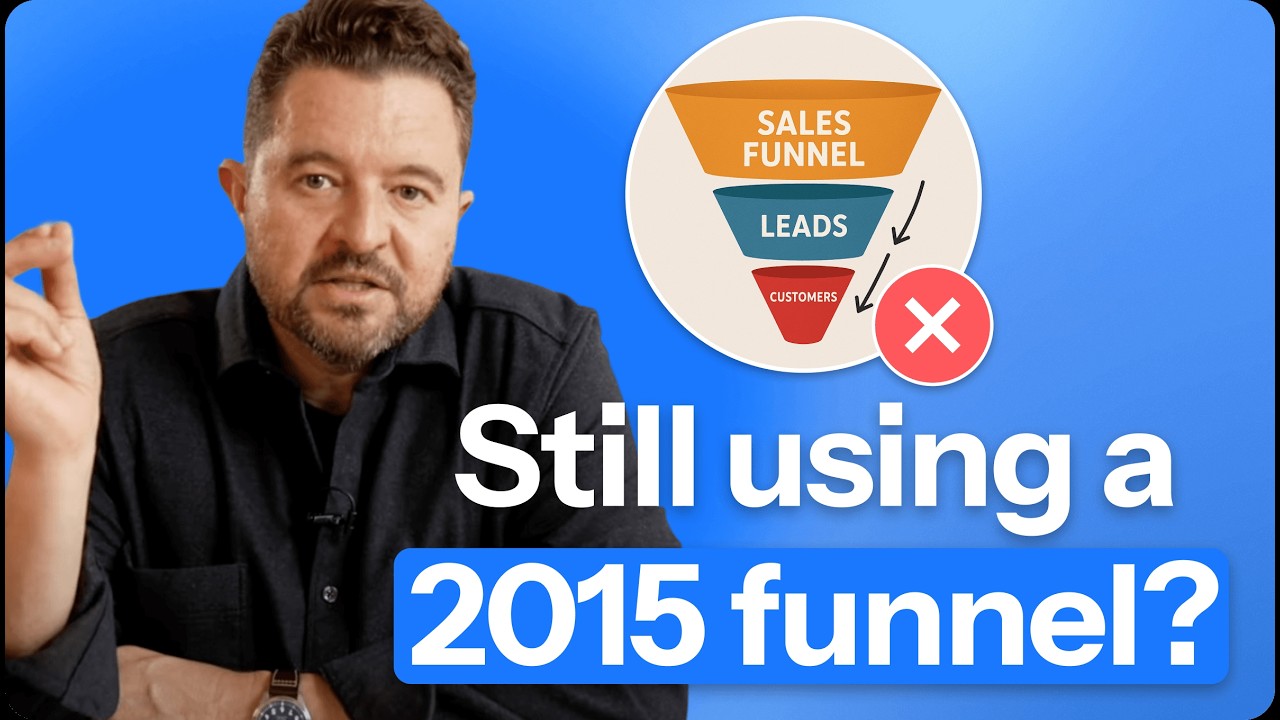
Lead Gen Secrets of Billionaires: 7 Principles Fast-Growth Companies Actually Use

Most lead generation advice sounds the same: post more content, run more ads, build a bigger list. The founders and marketers behind billion-dollar companies tend to ignore that advice entirely. After spending time behind the scenes at some of the fastest-growing businesses in the world, a clear pattern emerges. The principles that drive serious growth are surprisingly consistent, and several of them run directly against conventional wisdom.
Here are the seven principles that separate fast-growth companies from everyone else, and how you can apply them regardless of your team size or budget.
1. Radical Empathy for Where Your Customer Is Right Now
Every high-performing growth marketer studied in this framework shares one obsession: understanding the customer’s current reality in precise detail. Not their demographic profile. Not a vague buyer persona. Their actual daily frustrations, the words they use, the things that dominate their thinking, and the obstacles that feel impossible to move past.
One example that illustrates this well: a billionaire founder launching a new software product sat side by side with 30 people to watch how they moved through their email inboxes. Not to pitch them. To understand them.
This level of attention matters for lead generation because connection precedes conversion. You cannot write a headline that resonates, or build a landing page that converts, if you’re guessing at what your audience actually cares about. The faster you can map someone’s current situation, the easier it becomes to show them that what you offer is the logical next step.
One practical way to do this at scale is through a diagnostic scorecard. When your assessment asks questions about a prospect’s current situation and specific frustrations, you’re not just collecting contact details. You’re gathering zero-party data that tells you exactly what each person is dealing with, so your follow-up can speak directly to their world rather than broadcasting a generic message to everyone. ScoreApp is built around this idea: answers reveal fit, readiness, and need, so every next step can be genuinely relevant.
2. Fast and Cheap Experiments, Run Constantly
Fast-growth companies don’t wait until they have the perfect idea. They test 30 versions of a headline to find the one that works. They run multiple ad creatives simultaneously. They record several video pitches and let performance data pick the winner.
This isn’t recklessness. It’s a disciplined approach to reducing the cost of being wrong. When experiments are cheap and fast, failure is just data. Creators like those behind Diary of a CEO and marketers like Alex Hormozi have made this kind of systematic testing a visible part of their public strategy, but the same behaviour shows up consistently across high-growth businesses at every stage.
The good news is that running this kind of experimentation no longer requires a large budget or a dedicated analytics team. ScoreApp’s built-in A/B testing feature lets you pit landing pages against each other automatically, so you can identify what’s converting without manual tracking or guesswork. If you want a deeper look at how to structure this kind of testing for your business, the guide on how to 10x your business with fast, cheap experiments covers the mechanics in detail.
3. Repeat What Works Until It Stops Working
This is the principle most businesses get backwards. Once a fast-growth company finds something that converts, it doesn’t move on. It repeats the same approach, week after week, until the data signals that performance is declining.
A common pattern among stuck businesses is abandoning campaigns that were actually working. A small promotion generates 30 leads and one sale, and then the team moves on to the next idea. The logic seems reasonable: keep things fresh, keep innovating. In practice, it wastes the compounding value of a proven asset.
A landing page that converts at 20 to 40 percent is worth protecting. A scorecard that people genuinely enjoy completing is worth sending traffic to for months, not weeks. One landing page referenced in this framework generated over 39,000 leads across roughly two years without a single significant change. It wasn’t polished. The lighting was poor, this approach quality was rough, but the pitch connected.
The principle is simple: if you put the bucket down the well and it comes up with water, send the bucket back down. Don’t dig a new well just because you’re bored of the first one.
4. Never Switch Off the Engines
Performance marketing is the engine room of a business. Fast-growth companies treat it that way. They don’t pause campaigns for Christmas, for a slow quarter, or because the team is stretched. The campaigns stay on.
The reason is mechanical. Getting a campaign to perform takes effort and time. Once it’s working, switching it off means starting from scratch when you turn it back on. The boat analogy is useful here: it takes energy to get a boat planing across the water. Switch the engine off and it sinks back down.
There’s also a supply-side argument. Too many leads is not a problem. Oversubscription puts upward pressure on prices, generates more data to work with, and gives the business options. A pipeline that’s always full is a fundamentally different business from one that runs campaigns in bursts and then scrambles to fill the gap.
If you’re building a lead generation system that can run continuously, a well-designed scorecard or assessment is one of the most durable assets you can create. It qualifies leads automatically, delivers personalised results, and keeps working whether or not anyone on your team is actively managing it that day.
5. The Website Is for Show. The Action Is Elsewhere.
This is the principle that surprises people most. The brands you admire, the ones with beautiful websites and strong visual identities, are typically generating 95 percent of their actual traffic through performance marketing channels. The website is a credibility signal. It’s not where conversions happen.
Behind the scenes, fast-growth companies are running ads to specialised landing pages, segmenting their market, creating distinct experiences for different audiences, and driving people through tailored follow-up sequences. The homepage that looks impressive is getting a fraction of the traffic that the performance channels are handling.
A standard website form converts at roughly 2 to 4 percent. A landing page built around a specific, immediate call to action, particularly one tied to a scorecard, assessment, or workshop, can convert at 10 times that rate. Google’s own data supports this pattern. The implication is clear: don’t copy the beautiful website. Copy what’s happening behind it.
This is exactly why creating an effective lead magnet matters so much. The lead magnet is the front door to your performance marketing system, and the quality of that front door determines how much of your ad spend actually converts into qualified contacts.
6. Curiosity as a Growth Discipline
Fast-growth companies treat every result, good or bad, as information. A landing page that didn’t convert isn’t a failure. It’s a data point that makes the next version smarter. A campaign that underperformed against another campaign is useful precisely because of the contrast it creates.
The businesses that stall tend to respond to a poor result by stopping. They interpret a campaign that didn’t work as evidence that the whole approach is wrong, or that their market is different, or that nothing will work for them. Fast-growth companies don’t do this. They change the page, run another experiment, and keep moving.
Staying curious means treating your marketing as a system that improves through iteration rather than a series of bets that either pay off or don’t. The mindset shift is from “this didn’t work” to “what does this tell the business about what will?”
7. Putting All Seven Principles Together
These principles aren’t independent tactics. They compound. Radical empathy gives you better questions to ask in your experiments. Fast experiments generate data faster. Repeating what works extracts more value from the experiments that succeed. Keeping campaigns on means the compounding never stops. Focusing on performance channels rather than the homepage means your budget goes where conversion actually happens. And staying curious keeps the whole system improving over time.
The common thread is clarity. Fast-growth companies know who their customer is, what that customer needs, which messages connect, and which channels deliver. They’re not guessing based on demographics or inferring intent from clicks. They’re building systems that surface real answers.
That’s the same logic behind using a diagnostic scorecard as a core lead generation asset. When someone completes a scorecard, they’re telling you exactly where they are, what they’re struggling with, and what kind of help they’re looking for. That zero-party data makes every subsequent touchpoint more relevant, from the personalised results page they see immediately to the sales conversation that follows. If you want to see how this plays out in practice, the post on attracting high-paying clients on autopilot walks through the mechanics of building that kind of system.
For a deeper look at how top performers think about qualification and conversion, the breakdown of the psychology behind every sale is worth reading alongside this framework.
Your Practical Next Step
Pick one principle from this list that your business isn’t applying consistently. If you’ve never run a proper A/B test on a landing page, start there. If you have a campaign that worked six months ago and you switched it off, turn it back on.
The fastest way to apply several of these principles at once is to build a scorecard or assessment that runs continuously, tests well, and delivers a personalised experience to every person who completes it. You can build your first diagnostic scorecard with ScoreApp and start collecting the kind of zero-party data that makes every follow-up sharper and every sales conversation more productive.
The gap between businesses that grow fast and businesses that stay stuck usually isn’t budget or team size. It’s whether the systems in place are built to learn, qualify, and compound over time. These seven principles are the blueprint for building exactly that.
For a practical next step, see how ScoreApp handles this with quizzes, scorecards, and lead capture, then map the same principle into a simple funnel.