How a waitlist made $300,000 in three days (and picked the right product before a line of code was written)

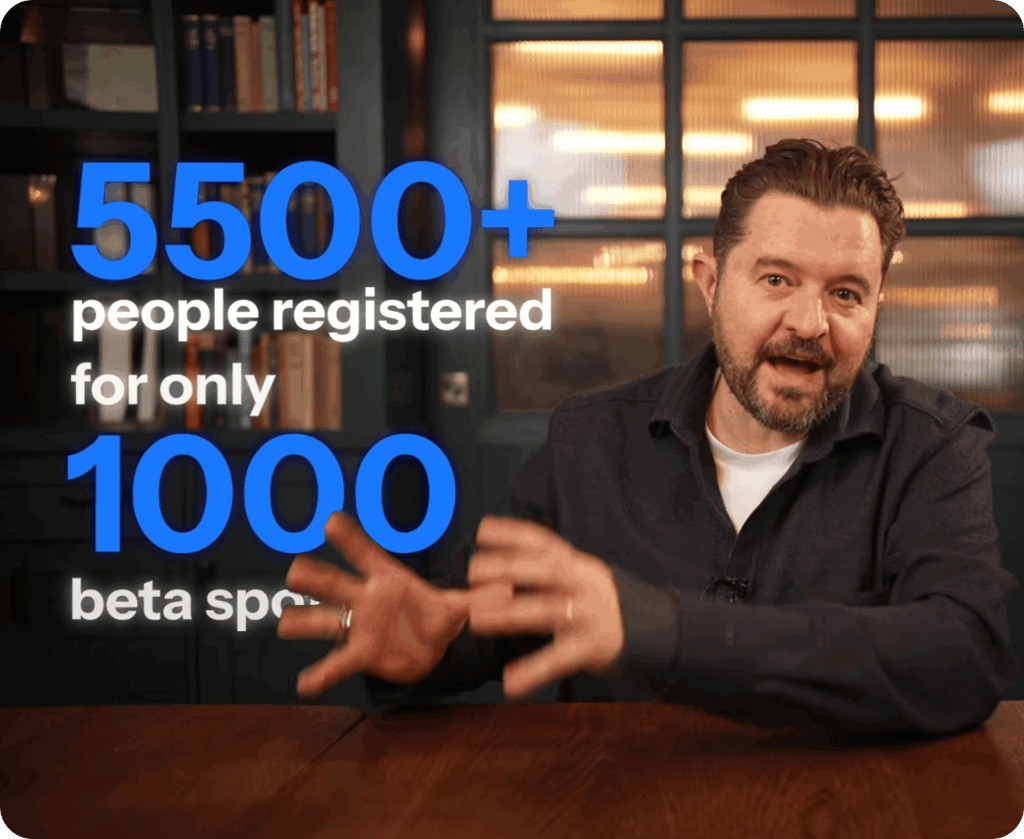
Six months before launch, Daniel Priestley had two ideas and no idea which one to build.
He had energy for both. He had arguments for both. His gut leaned one way — the market would decide the other.
So instead of committing to one and hoping for the best, he ran an experiment. He launched a waitlist for each idea — same effort, same energy, same promotion — and let the data make the call.
The results were not subtle.
One waitlist: 750 signups. The other: 4,500 signups. And when Daniel looked at the answers people gave when they joined, the gap got even wider — 40% of the people on the first waitlist were leads he couldn’t actually help. The second? Everyone was ready to go.
That data didn’t just pick the product. It went on to convince angel investors, pre-qualify thousands of buyers, and set up a launch day that generated $300,000 in three days — with 1,000 paying customers in the first week.
Watch Daniel tell the full story, then read the step-by-step breakdown below. You can always skip to the end and learn how you can build a waitlist for your idea.
The two-idea experiment
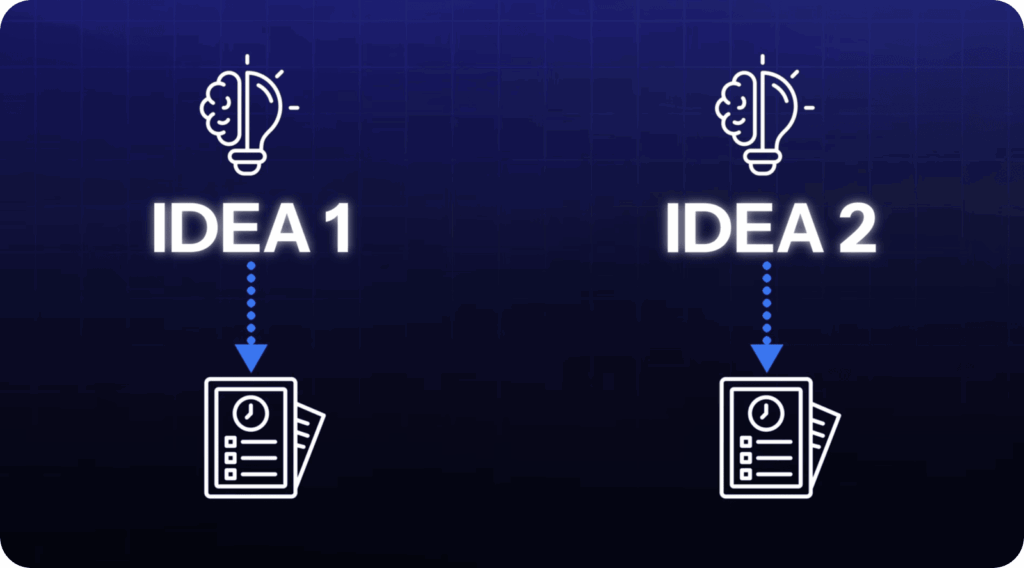
Two ideas, two waitlists, one data-driven decision
The first idea was Daniel’s favorite. He was most curious about it, most excited by it — an AI tool that would turn a business into a conversational engine. He built a ScoreApp waitlist, promoted it, and watched the signups come in.
750 people joined.
Not bad on its own. But then the second waitlist went live.
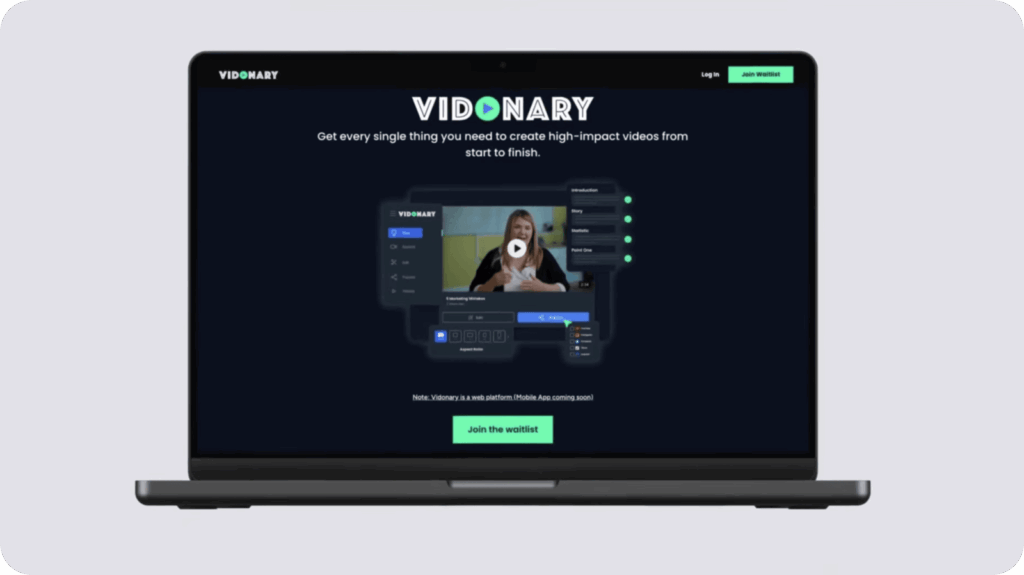
This one was for a video platform — a SaaS tool that would help businesses script, produce, edit, and publish short and long-form video content. Daniel was less personally attached to this idea. It wasn’t the one he’d daydreamed about. But he ran the same process and watched what happened.
Four and a half thousand people joined almost immediately.
That contrast alone would have been enough. But the real insight came from the answers people gave when they signed up — the five to ten questions baked into each waitlist. On the first idea, 40% of respondents described situations where the team simply couldn’t help them. On the second, the problem was clear, consistent, and solvable.
“The data had confirmed which idea was better. One idea: 750 people on the waiting list. Same amount of energy and effort. Four and a half thousand people on the waiting list. One idea: 40% of people we couldn’t help. The other idea: everyone ready to go.”

The decision wasn’t difficult after that. Daniel doubled down on the second idea — the one the market had chosen for him. That product became Vidonary.
How the waitlist data convinced angel investors
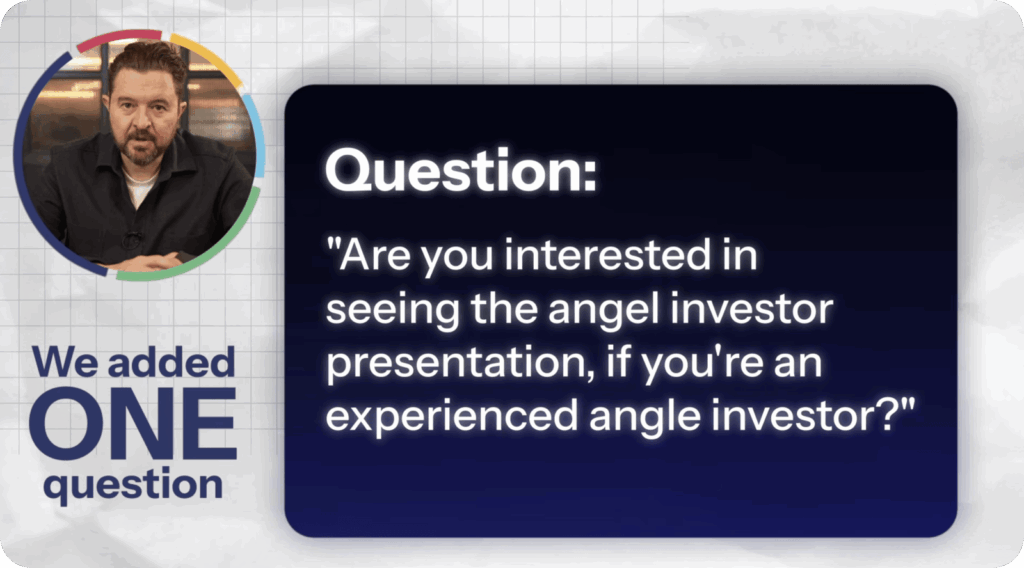
One question, added to the existing waitlist — and thousands of potential investors raised their hands
Most founders pitching investors walk in with a deck, a vision, and a hope. Daniel walked in with something more valuable: proof.
After validating the idea with the initial waitlist, he added a single question to the signup flow: were they interested in seeing the angel investor presentation — assuming they were an experienced investor?
Thousands of people said yes.
But Daniel didn’t just funnel them all into a webinar. He used ScoreApp again — this time to build a registration page that screened for genuine sophistication. Questions designed to verify whether someone was actually a qualified investor, not just curious. The unready were filtered out. The right people got in.
The result was a webinar that showcased Vidonary’s business plan to an audience of experienced angel investors — who could see, in real time, that 4,500 people had already signed up, that the data showed clear demand and willingness to pay, and that the team had the validation to back it up.
“Within about a week or two, we’d raised the full angel investor round at a multimillion-dollar valuation.”
The waitlist hadn’t just validated the product. It had become the pitch.
Building to launch: 5,500 people, 1,000 spots
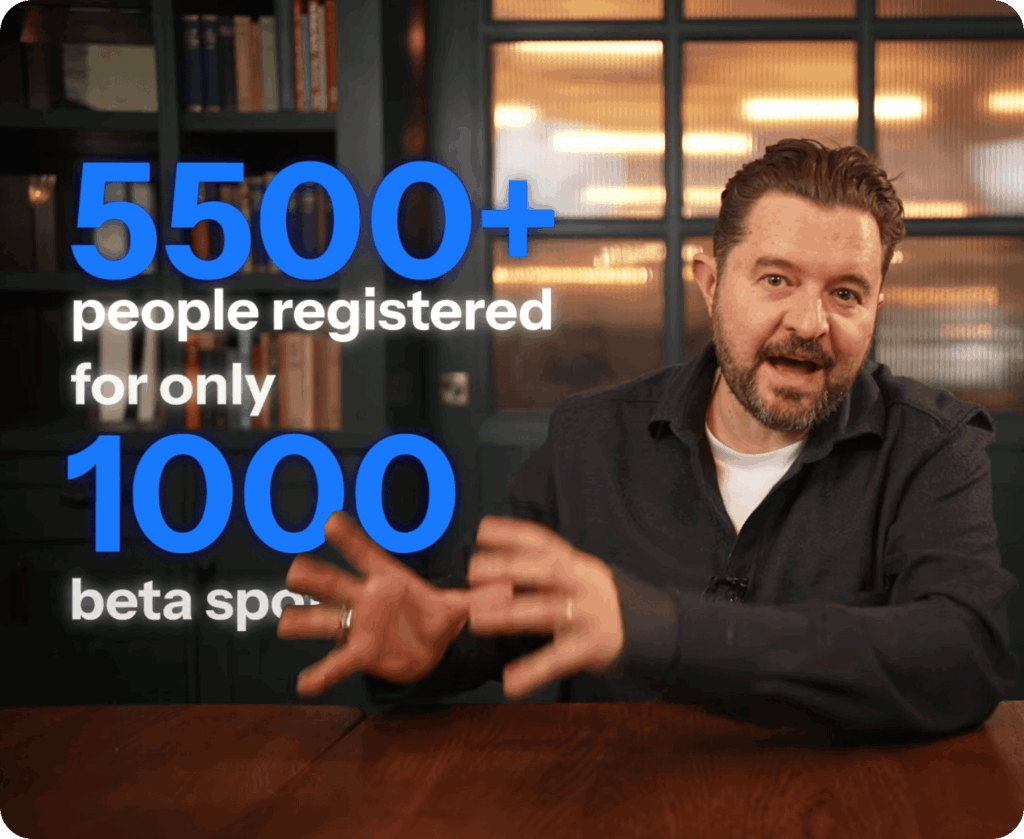
Real scarcity — earned by six months of consistent waitlist building
With funding secured and developers hired, the team kept building the waitlist while building the product.
They sent updates. They shared videos. They kept the community warm — letting people know what was being built, when it was coming, and why they were part of it. By the time Vidonary was ready to launch, 5,500 people had registered for just 1,000 beta spots.
Launch day wasn’t a cold start. It was a trigger pulled on a gun that had been loaded for months.
“Within three days, we’d signed up a thousand paying customers. Those first thousand people were happy to have version one of the product — and excited to use our very first version.”
Hundreds more missed out and wrote in asking for access. The scarcity was real. The demand was real. And when Daniel relaunched a second waitlist — for version two of Vidonary — thousands more joined within days.
Most SaaS companies don’t hit 1,000 paying customers in their first 12 months. Vidonary did it in its first week — because of six months of work that happened before a single sale was made.
What made this work: the questions
The waitlist wasn’t just a name-and-email form. That’s the part most people miss.
At every stage — the initial idea validation, the investor screening, the beta launch, the version two re-engagement — Daniel used ScoreApp to ask five to ten targeted questions. The answers shaped every decision that followed.
For the idea validation: questions that revealed whether respondents had a real problem that Vidonary could solve.
For the investor screening: questions that filtered for genuine sophistication and investment experience.
For the beta launch: questions that helped the team understand who to prioritize, what features mattered most, and how to personalize the onboarding.
For version two: questions that captured what the waitlist wanted next, so the team could build with confidence.
“It’s that little dance with the market. We’ve got strong ideas, but then we validate those ideas with the data. We show people what we’re thinking, and they tell us whether they like it or not.”
The questions didn’t just collect data. They built a relationship between the product and the people who would eventually buy it.
The playbook works for more than SaaS
It would be easy to look at this story and think: that’s impressive, but it’s a software company. I’m a coach. I run an agency. I sell a program. This doesn’t apply to me.
It applies to all of it.
The Vidonary waitlist strategy is really a demand validation system — and it works anywhere you’re planning to put something new into the world. Here are a few ways to run the same playbook:
| If you’re launching a new program or course: Build a waitlist before you build the program. Let signups tell you what outcomes they want, what they’ve already tried, and what’s holding them back. The answers shape the content — and the launch. |
| If you’re moving from one-to-one to group coaching: Validate demand before you invest in the infrastructure. A waitlist with the right questions tells you whether the market wants a group format — and which version of it. |
| If you’re planning a retreat or live event: A waitlist lets you gauge genuine interest before you book venues and speakers. It also helps you segment attendees so you can tailor the experience before they arrive. |
| If you’re raising investment: Use a waitlist with investor-screening questions — just like Daniel did. Walking into a pitch with validated demand data is worth more than any slide deck. |
| If you want to understand your existing customers better: You don’t need a launch to run this system. A customer insights survey gives you the same data-led clarity — and can improve your product, your positioning, and your sales process overnight. |
The common thread? Don’t guess. Ask. Then build for the answers you get.
Your next step: build your waitlist before you’re ready
Time needed: 30 minutes
1. Build your waitlist with the AI builder
Tell it what you’re launching, who it’s for, and what you want to find out — then let it generate a smart first draft covering questions, scoring logic, and results page structure. It takes minutes to get something solid to work from.
2. Use a waitlist template if you’d prefer a head start
Browse pre-built waitlist scorecards designed for launches, programs, and early-access offers. Pick the closest match and make it yours — the structure is already there.
3. Add 2–3 segmentation questions
Don’t just collect names — collect insight. Ask about timeline, budget comfort, what problem they’re trying to solve, and where they are right now. These answers let you segment your waitlist into tiers and personalize your launch messaging for each one.
Think about what Daniel’s waitlist revealed: not just who wanted the product, but who he could actually help. That’s the difference between a list and a launch asset.
4. Set up your results page to do the nurturing for you
Hot lead? Give them early access or a clear next step. Not ready yet? Point them to a piece of content, a masterclass, or a ‘come back when’ moment. Your results page should be doing work even while you sleep.
The best waitlists don’t just collect interest — they start the relationship on the right foot, automatically.
The Vidonary story didn’t start with $300,000. It started with two waitlists, a handful of questions, and a willingness to let the data make the call.
That’s available to any business with a launch on the horizon. The experiment is cheap. The data is priceless. And the alternative — building something and hoping it lands — is a much harder way to grow.
Build the waitlist first. Everything else gets easier.