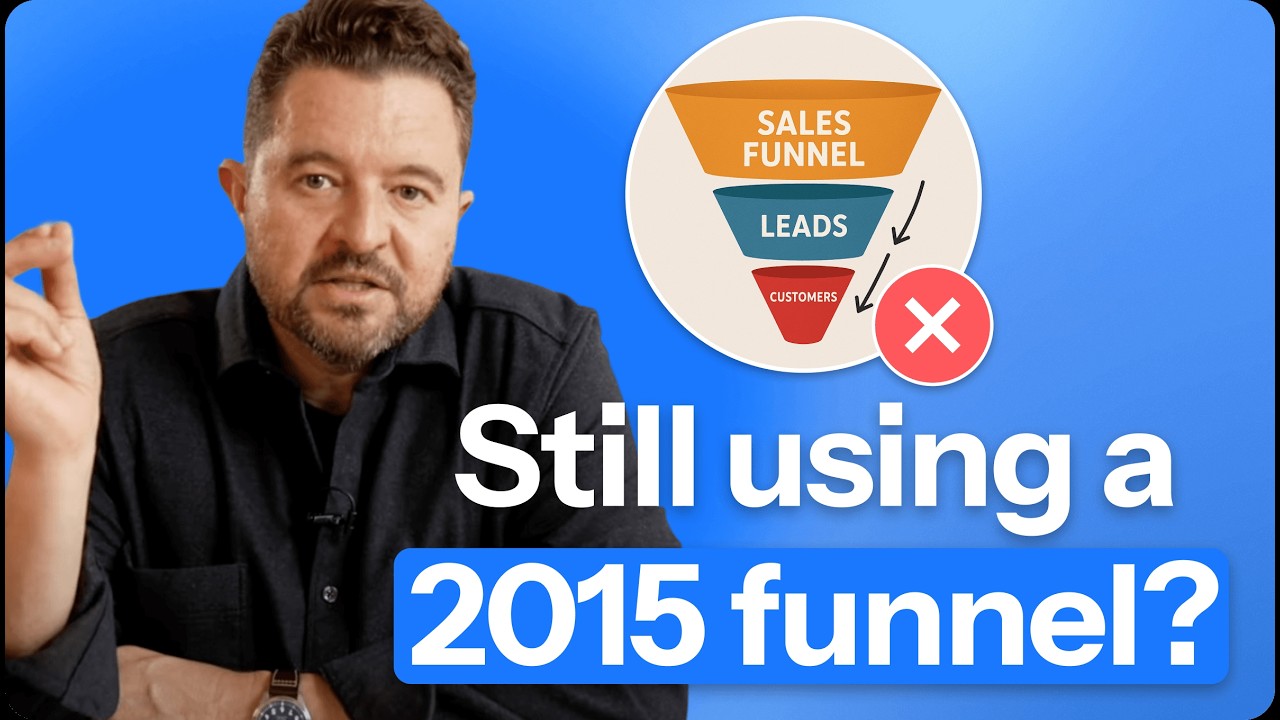

Vibe coding is genuinely impressive. You can spin up a website in minutes, build tools that would have taken weeks a few years ago, and feel like you’ve unlocked a new level of productivity. The enthusiasm is understandable. But there’s a specific mistake that’s starting to cost people real money, and it’s worth understanding before it costs you too.
The mistake is applying vibe coding to mission-critical parts of your business, particularly lead generation. It looks like a smart shortcut. In practice, it quietly erodes results, drains time, and pulls your focus away from the work that actually makes you valuable.
Why Lead Generation Is the Wrong Place to Cut Corners
Everything in a business flows downstream from lead generation. If that part of the system is underperforming, the damage compounds across every other metric: conversion rates, average deal size, client quality, and revenue. A small improvement in lead generation doesn’t produce a small improvement in results. It multiplies.
Consider a straightforward example. A campaign generating 100 leads at a 10% conversion rate, with clients paying $1,000 each, produces $10,000. Now improve each variable modestly: 110 leads, an 11% conversion rate because the leads are better qualified and better warmed up, and $1,100 per client because richer data lets you be more selective. The result isn’t $10,300. It’s $13,300. That’s a 33% increase from compounding small gains across the same spend.
Saving $40 or $50 a month by vibe coding your own quiz or scorecard campaign might feel efficient. But if a purpose-built, data-informed tool would have produced even modestly better results, that saving could be costing $3,000 or more in missed revenue every single month.
Your Time Is Not a Free Resource
The second problem is how vibe coding a complex marketing tool actually uses your time once you account for the full picture.
A simple static website might take 20 or 30 minutes to build and rarely needs touching again. A quiz or scorecard campaign is a different category of project entirely. It involves a landing page, question logic, scoring rules, data collection, a results report, and a follow-up sequence. Even for someone experienced with vibe coding tools, getting all of that working properly takes close to a full day. The first 80% might come together quickly. The remaining 20%, the part where everything actually works correctly end to end, takes far longer.
And it doesn’t stop at launch. Software needs maintaining. Bugs surface. Integrations break. The world moves on. Realistically, keeping a vibe-coded campaign functional and current requires another 10 hours or more every quarter. Across a year, that’s easily 20 to 40 hours for a single tool.
The more damaging pattern is when this mindset spreads. If you’re vibe coding your quiz campaign to save a subscription fee, the same logic pushes you to vibe code five or six other tools as well. Suddenly, a meaningful portion of your working year is spent maintaining IT projects rather than doing the work you’re actually exceptional at. The founders who build the most valuable businesses tend to do the opposite: they focus intensely on their area of genuine strength and outsource everything else to people who specialise in it.
General Purpose AI Gravitates Toward Average
Vibe coding tools are trained on a broad cross-section of what exists on the internet. That breadth is part of what makes them useful for general tasks. But it also means they naturally produce output that reflects the average of what they’ve seen, not the best-performing examples in a specific category.
For a quiz or scorecard campaign, that distinction matters enormously. ScoreApp has processed data from over 150,000 real marketing campaigns. The platform can identify which campaigns convert at the highest rates, which generate the most qualified leads, and what separates the top 5% from the rest. That insight is built directly into ScoreApp’s AI tools, so when the platform generates copy, structure, or scoring logic, it’s drawing on what has actually worked at scale, not what looks plausible based on general internet content.
A vibe-coded campaign can look polished. It can feel professional. But looking the part and converting at a high rate are different things, and the gap between them is where revenue gets lost. If you want to understand how purpose-built AI tools approach campaign structure differently, the definitive guide to personalising your marketing with AI research is worth reading alongside this.
Continuous Improvement Requires a Dedicated Team
Marketing technology doesn’t stay still. New integrations emerge, AI capabilities shift, best practices evolve, and the tools that performed well six months ago may need updating to stay competitive today. Keeping pace with that requires ongoing attention from people whose entire job is focused on exactly that.
A recent ScoreApp integration connecting the platform with a range of external AI tools took a team of four people approximately a month to build and test properly. That’s the kind of continuous improvement that happens quietly in the background when you use a dedicated platform. It’s simply not something a solo founder can replicate while also running their business, regardless of how capable they are with vibe coding tools.
When you subscribe to a specialised platform, you’re not just paying for what it does today. You’re outsourcing the ongoing work of keeping it current, secure, and improving to a team whose entire focus is that one thing.
Where Vibe Coding Actually Shines
None of this is an argument against vibe coding. For the right use cases, it’s a genuinely powerful capability. Static pages, internal tools, one-off projects that don’t need to stay current, things that aren’t tied directly to revenue or lead flow: these are excellent candidates. Build them quickly, ship them, and move on.
The distinction worth drawing is between tools that are fairly static and low-stakes versus tools that are mission-critical, need to perform at a high level, and require continuous improvement to stay effective. Lead generation sits firmly in the second category. So does anything that touches how prospects experience your brand, qualify themselves, or decide whether to take the next step.
For a practical look at how a well-structured lead generation campaign actually works, this full breakdown of turning Instagram into a lead machine shows the kind of strategic depth that separates high-converting campaigns from basic ones.
What ScoreApp’s Built-In AI Actually Does
ScoreApp includes AI tools built directly into the platform, trained on real campaign data rather than general internet content. You tell the platform who your customer is, what you want them to do, and what you do for them. From there, it generates a campaign structure, copy, and scoring logic informed by what has actually converted across hundreds of thousands of campaigns.
The platform also collects zero-party data, meaning answers that people provide directly rather than inferred behaviour or third-party tracking. That data feeds into segmentation and personalised results, so each person who completes a scorecard gets a next step that’s relevant to their specific situation rather than a generic follow-up. That’s the difference between a tool that collects responses and one that turns responses into meaningful insight and action.
If you’re thinking about how a scorecard fits into a broader lead generation strategy, this case study on how a well-designed assessment doubled a close rate shows what that looks like in practice.
You can explore ScoreApp’s AI campaign builder with a free account and see what it produces when you describe your audience and goals. The output reflects years of campaign data, not a general-purpose guess at what a quiz should look like.
The Compounding Cost of the Wrong Tool
The vibe coding mistake isn’t really about the technology. It’s about misapplying a genuinely useful capability to a context where it produces compounding costs: lower conversion rates, hours of maintenance work, and a gradual drift away from the focused expertise that makes a business worth building.
The sharper question isn’t whether you can vibe code a quiz campaign. You probably can. The question is whether doing so is actually the best use of your time and attention, and whether a general-purpose tool is the right foundation for something as consequential as how your business generates and qualifies leads.
For most businesses, the answer points clearly toward using a platform built specifically for that purpose, with the data, team, and continuous improvement that the task actually demands. Start by seeing what ScoreApp’s AI builder generates for your specific audience and offer.