The AI Prompt That Generated $300,000 in One Week

A dead email list is usually written off as a lost cause. Subscribers stop opening, open rates fall, and most businesses either delete the list or leave it dormant. Daniel Priestley, entrepreneur and ScoreApp co-founder, tells a different story about one ScoreApp user who took a quiet list and turned it into $300,000 in sales within a single week, using a single AI prompt built around three simple inputs.
The three pillars behind a working AI prompt
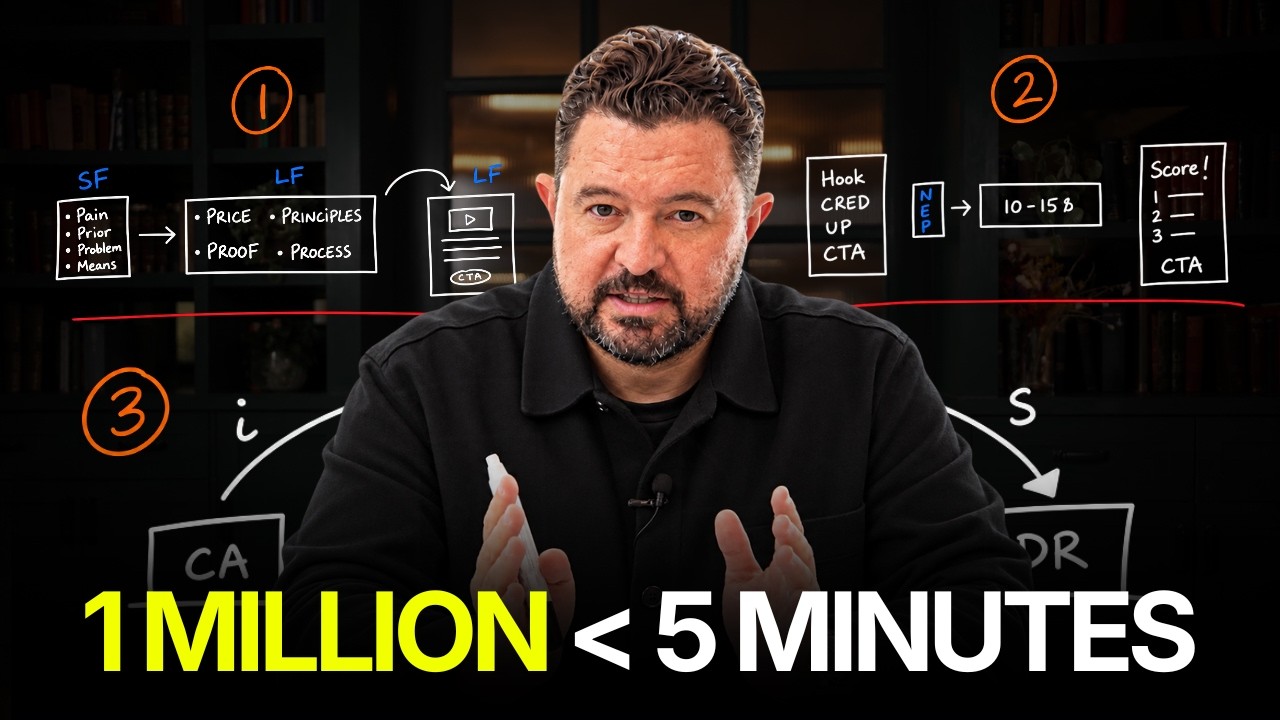
Priestley argues that almost anyone can construct a prompt capable of generating a full marketing campaign, provided they know three things first. The first is intellectual capital: the knowledge, background, and playbook a business owner already holds. The second is the ideal customer persona, meaning who actually gets the most value from that knowledge. The third is a compelling call to action, the specific next step a prospect is invited to take.
Get those three elements right and an AI tool has enough context to write copy, structure an offer, and build a campaign that sounds like it came from someone who actually understands the business, rather than a generic template.
Mapping intellectual capital with the situational model
Priestley calls his framework for intellectual capital the situational model, built around four connected ideas: pain, prize, problem, and path. Pain is what a typical client is currently struggling with. Prize is the outcome that client wants to reach. Problem is the reason they have not solved it on their own yet. Path is the sequence of steps that gets them from pain to prize.
Put together, pain, prize, problem, and path form a playbook that most business owners already carry in their heads without ever writing it down. Priestley’s point is that articulating this clearly, even in a few sentences, gives an AI system enough substance to produce marketing material that reflects genuine expertise instead of vague, interchangeable claims.
A useful next step here is to see the framework in action inside a real scorecard project, which is exactly what Daniel Priestley’s scorecard method for lead generation walks through in more detail.
Finding the audience with the most budget to spend
The second pillar, the ideal customer persona, depends on understanding how a market is actually structured. Priestley splits most markets into three tiers: the top 1 percent, which he labels the luxury segment, the next 9 percent, which he calls the affluent niche, and the remaining 90 percent, the mass market.
According to Priestley, roughly 60 percent of available spending sits with that top 10 percent, while the mass market controls the remaining 40 percent despite being nine times larger by headcount. Each tier also responds to a different message. The luxury segment reacts to pedigree, meaning history, credentials, and track record. The affluent niche responds to passion and a clear sense of purpose behind the work. The mass market, by contrast, is largely driven by price.
For most small and mid sized businesses, Priestley points to the affluent niche as the strongest target, since it combines a meaningful share of the available budget with an audience that responds well to authentic positioning rather than the cheapest offer on the table. Businesses looking to sharpen that positioning can build a free scorecard with ScoreApp to work out which niche their own audience actually falls into before writing a word of campaign copy.
Designing a call to action people actually take
The third pillar is the call to action itself, and Priestley is specific about what makes one work. A strong call to action needs to be free, it needs to deliver an immediate benefit, and it should include a bonus that lowers the perceived risk of engaging further. Rather than asking a cold audience to commit to a paid product straight away, the goal is to create what Priestley calls a product for prospects, an easy first step that starts building trust.
For a coaching business focused on public speaking, that first step might be a short self assessment of how confident someone feels presenting today. For a different business it could be a quiz, a checklist, or a short diagnostic quiz. The format matters less than the fact that it costs nothing, gives something useful in return, and opens the door to a longer relationship rather than demanding an immediate purchase decision.
Turning the three pillars into a single prompt
Once intellectual capital, ideal customer persona, and call to action are clear, Priestley describes assembling them into one structured AI prompt. The prompt states the goal of building a marketing campaign, describes the product or service on offer, defines the ideal customer, explains the pain, prize, and problem that make up the intellectual capital, and finally spells out the call to action along with the bonus attached to it.
Priestley walks through a worked example built around a presentation skills coach. The persona is an executive with strong technical ability who has never felt confident speaking publicly. The pain is a lack of confidence and stagecraft. The prize is a presentation that leaves an audience genuinely impressed. The call to action is a short online assessment, and the bonus is a custom checklist paired with a ten minute video. Feeding that structure into ScoreApp’s AI builder produces a working campaign, branded and ready to publish, in a matter of minutes rather than the day or more it traditionally takes to plan from scratch.
That speed is the part Priestley keeps returning to. Businesses no longer need a full day blocked out for campaign planning once these three pillars are defined, because the AI only needs a clear nudge in the right direction to produce something usable. Anyone curious about the mechanics behind fast campaign assembly can also look at how AI quiz funnels turn leads into real assets for a closer look at what happens after the prompt produces a working funnel.
Why a dormant list is not actually dead
The $300,000 result Priestley describes came from applying this exact structure to a list that had already gone quiet. Rather than treating unopened emails as a lost cause, the ScoreApp user applied a fresh, well targeted campaign built on a clear intellectual capital statement, a defined persona, and a specific low friction call to action. The list had not disengaged because the people on it lost interest in the underlying problem being solved. It had gone quiet because the messaging had gone stale.
That distinction matters for any business assuming an old list is worthless. A subscriber who signed up months or years ago because a problem resonated with them at the time is still a warmer lead than a stranger seeing a cold ad, provided the follow up message reflects genuine intellectual capital rather than a generic newsletter blast. Priestley’s framework gives that follow up message the structure it needs to land.
Businesses working through their own version of this exercise can compare notes with other founders and marketers who have used similar zero party data approaches by reading the lead generation principles fast growth companies actually use, which covers several of the same audience segmentation ideas Priestley references here.
Building the campaign without starting from a blank page
What makes this approach practical rather than theoretical is that none of the three pillars require specialist skills to define. Most business owners can describe their own pain, prize, and problem in a few honest sentences, since it is simply how they already talk about their work with clients. Defining an ideal customer persona is a matter of thinking through who has both the budget and the motivation to act quickly, which usually points toward that affluent niche rather than the mass market. The call to action just needs to be low risk enough that saying yes feels easy.
Once those three answers exist, building a working campaign becomes a matter of assembling and testing rather than starting from a blank page. A business exploring this can build a free scorecard with ScoreApp using the same structure Priestley outlines, pulling in existing branding and tone of voice directly from a website to speed up the setup even further.
For businesses with a lead magnet already in place but looking for a stronger opt in step, how to create an effective lead magnet for your business covers the mechanics of pairing a call to action with the right kind of bonus, which lines up closely with the product for prospects concept described above.
Getting started this week
Reviving a quiet list does not need a rebrand or a new offer. It needs a clear statement of who the business helps, who benefits most from that help, and a specific first step for them to take. Writing those three things down in a few sentences is enough raw material for an AI prompt to produce a complete campaign, ready to test against a list that has been sitting untouched.
Businesses ready to put this into practice can build a quiz funnel with ScoreApp using their own pain, prize, problem, and call to action as the starting prompt, then measure how a previously dormant audience responds once the message actually fits them again.