The One-Hour Assessment System That Can Add Seven Figures In Leads

Most businesses treat lead generation as a content problem. Post more, post often, hope something lands. A different approach treats it as a system problem instead: build one interactive assessment, set it up properly once, and let it run for a year or more with almost no ongoing input. That is the promise behind a simple three-part framework built around a fifteen question quiz, and the mechanics behind it are specific enough to copy directly.
Why A Landing Page Beats A Homepage
Sending cold traffic to a standard homepage typically converts two to four percent of visitors into leads. Sending the same traffic to a purpose built assessment landing page can lift that figure to twenty or forty percent. The difference comes down to focus. A homepage tries to explain an entire business. An assessment landing page has one job: convince a visitor to answer fifteen questions in exchange for an immediate, personal result.
That single job is also why the format suits certain businesses far better than others. Service based companies, agencies, B2B sales teams, SaaS providers and consultants tend to see the biggest lift, because their offers require explanation and trust. Simple, visual, self-explanatory products such as mugs or t-shirts do not need this kind of qualification step and would find it overkill.
Building The Landing Page In Four Parts
The Hook: Frustration Or Readiness
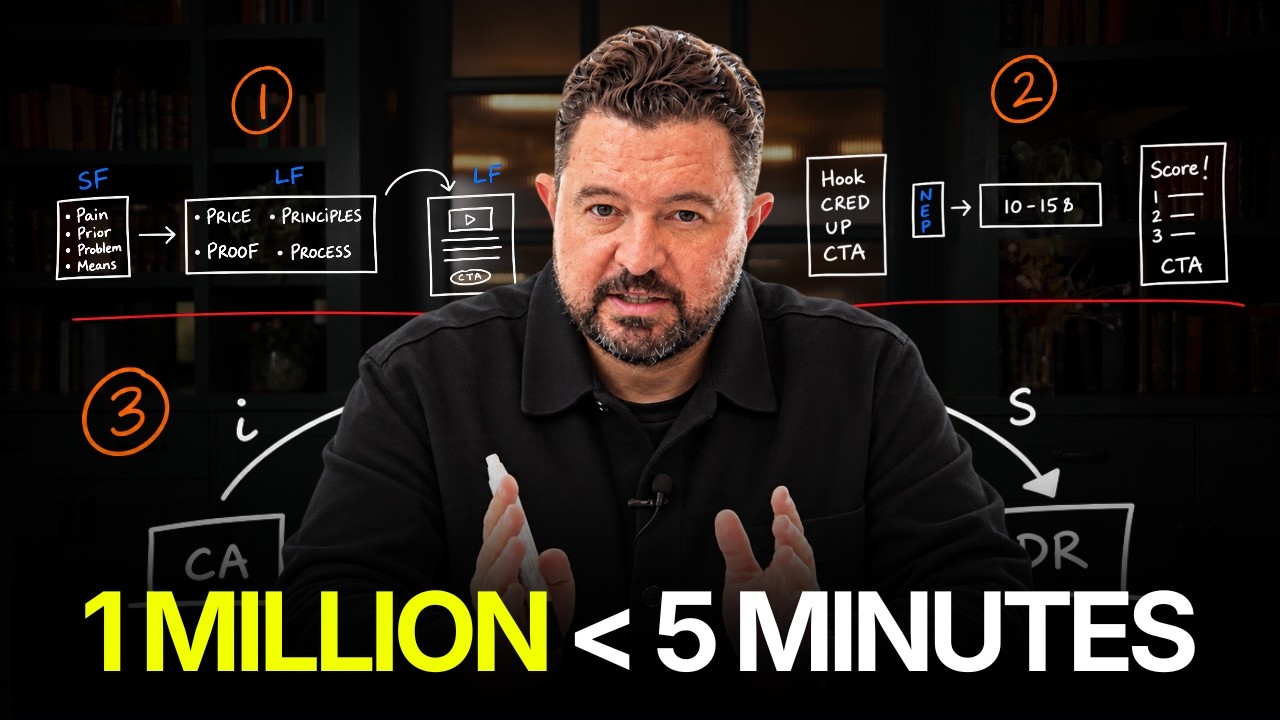
Every high performing landing page opens with one of two hook styles. A frustration headline names a pain point directly: “Feeling frustrated that your business has stopped growing?” A readiness headline names the desired outcome instead: “Are you ready to run your first marathon?” Both approaches work by naming something specific to the ideal customer’s current situation, then inviting them to answer fifteen questions to find out more.
Three Benefits, Stated As A Promise
Directly below the hook sits a short promise: this assessment will measure and improve three specific things. A fitness offer might promise to measure and improve sleep quality, diet and exercise intensity. A business offer might promise to measure and improve marketing, systems and financial control. Naming three concrete areas gives the visitor a reason to expect a useful, personalised result rather than a generic quiz.
Authority, Credibility And A Different Kind Of Testimonial
Trust gets built in three moves. First, a short bio establishes who is behind the assessment. Second, a citation to relevant research (a university study, an industry report) lends the topic weight. Third, and less obviously, a testimonial about the experience of taking the assessment itself, not about the business behind it. A line describing immediate clarity gained from taking the assessment works because it describes the exact outcome a new visitor is about to get.
One Call To Action, Repeated With Purpose
Multiple buttons can appear throughout the page, but the final call to action carries the real weight. It should state plainly that the assessment takes roughly three minutes, that results are immediate, and that it is free. Those three details remove the most common objections before a visitor even raises them: whether this will take too long, whether there is a wait for anything useful, and whether there is a hidden cost. Handling all three inside one sentence is deliberate, not accidental.
Building this kind of page from scratch is exactly the kind of work a lead generation software platform is designed to remove, since most of the structure above already exists inside a template rather than needing to be built from a blank page.
Fifteen Questions That Do The Qualifying Work
The middle section of the assessment captures a name and email address, with location tracked automatically from IP data rather than asked directly. Then come the fifteen questions themselves, structured in a deliberate order rather than a random list.
Ten Best Practice Questions
The first ten questions check whether the respondent is following known best practices in their area, phrased as either “are you doing the right things” or “are you doing the wrong things.” A sleep focused assessment might ask whether someone goes to bed at a consistent time, or whether they check their phone right before sleeping. The goal across all ten is to gently surface a gap between what the respondent is currently doing and what actually works.
Current Reality, Desired Reality And The Obstacle
Three questions follow the best practice section, each with a distinct job. A current reality question asks which category best describes the respondent’s situation right now, whether that is job title, age range, experience level or team size. A desired reality question asks which outcome they are actually looking for. An obstacle question asks what they have already tried that has not worked. Together, these three questions build a clear before-and-after picture in the respondent’s own mind, which is precisely what makes someone ready to consider a solution.
A Preferred Option And One Open Question
The fourteenth question asks about a preferred type of solution, whether that is software, one-to-one support, group coaching or a done-for-you agency service. This answer often reveals budget expectations without asking about money directly. The fifteenth and final question is optional: an open field inviting the respondent to add anything else worth knowing. It is a simple open text box, and it consistently produces some of the most useful information in the entire assessment, from timelines to specific budgets to statements of urgent intent.
What Happens The Moment Someone Finishes
Scores, Insights And Two Different Introductions
As soon as the final question is answered, a results page loads instantly. It opens with a score, which can be presented as a traffic light system, a speedometer, a thermometer, or a simple percentage. Underneath the score sit two or three tailored insights based on how the respondent answered, followed by a short introduction. This is where the system becomes genuinely dynamic: a high scoring, highly qualified respondent sees one introduction and one recommended next step, while a lower scoring respondent sees a different, more general introduction and a lighter next step such as a piece of content or a book recommendation. The page effectively starts allocating time and attention before any human is involved.
This kind of segmentation is the clearest example of ScoreApp’s underlying idea in practice: answers, not clicks or page visits, determine what each person sees next. That distinction between behavioural guesswork and answer-based clarity is explored further in a related look at how a five-principle system built around daily habits can compound into consistent income over time.
PDF Reports And Follow Up Sequences
An optional PDF report adds another layer of value. It can sit on a respondent’s computer, appear in local search results, and get printed out for later reference, all of which extend the assessment’s shelf life well past the moment someone completes it. From there, a nurture email sequence keeps the connection alive: sharing further content, inviting people to an event, or pointing toward relevant social channels depending on how someone scored.
Where This Fits Alongside Everything Else
None of this replaces existing content output. A newsletter, a YouTube channel or a regular LinkedIn post still does its job of attracting attention. What changes is the destination at the end of that content: instead of sending people to a generic contact page, each piece of content can point toward the assessment as the next step. The pitch also shifts subtly but importantly. Rather than promoting a service directly, the promotion becomes about the assessment itself. A doctor does not offer to put a patient’s leg straight into a cast. A doctor offers an X-ray first, to see what is actually going on. Selling the diagnostic step, rather than the eventual solution, tends to convert far more easily because it asks for less commitment upfront.
Businesses that have already built a coaching or consulting offer around a single assessment have reported this shift directly, as detailed in an account of how one operator managed to sell out coaching packages using one scorecard assessment rather than a traditional sales page.
Setting It Up Without Overcomplicating It
The entire structure, landing page, fifteen questions and dynamic results, typically takes one to two hours to configure using an existing template rather than a blank page. Trying ScoreApp free is a practical way to see this structure already built out, since the platform includes roughly 150 templates covering different industries and outcomes, which removes most of the guesswork around wording, question order and scoring logic.
Once live, the asset keeps working with very little maintenance. It can run for twelve, twenty-four or even thirty-six months before it needs a meaningful update, generating a steady stream of qualified leads while other content formats need constant refreshing. For businesses selling anything that requires explanation, trust or a longer sales cycle, that combination of low maintenance and high qualification is difficult to replicate with a standard contact form.
Anyone considering a first version of this system can browse existing setups on a scorecard lead generation page before mapping out their own fifteen questions and results structure.