Sell Out Coaching Packages Fast With One Scorecard Assessment

A coaching business with a full calendar and no marketing plan sounds like a fantasy. One consultant made it real in a single afternoon, filling twelve coaching slots for the entire year before he left the building. No funnel, no ad spend, no chasing. Just a stage, a QR code, and a short assessment that did the qualifying work for him.
The setup: a room full of the right people
The plan started with a simple question: what is the fastest way to sell twelve coaching packages this year? Daniel Priestley, co-founder of ScoreApp, gave the coach one piece of advice over dinner. Find an event with the right audience, even if that means paying a small sponsorship fee to get a slot on stage, and use that appearance to create a moment of decision rather than a slow-burn nurture sequence.
The coach took the advice. He sponsored a conference attended by around three hundred CEOs, secured a forty five minute speaking slot, and used it to share his story and his core methodology. That part is fairly standard advice for anyone building authority in a room of buyers. What happened next is the part worth studying.
The call to action that changed the outcome
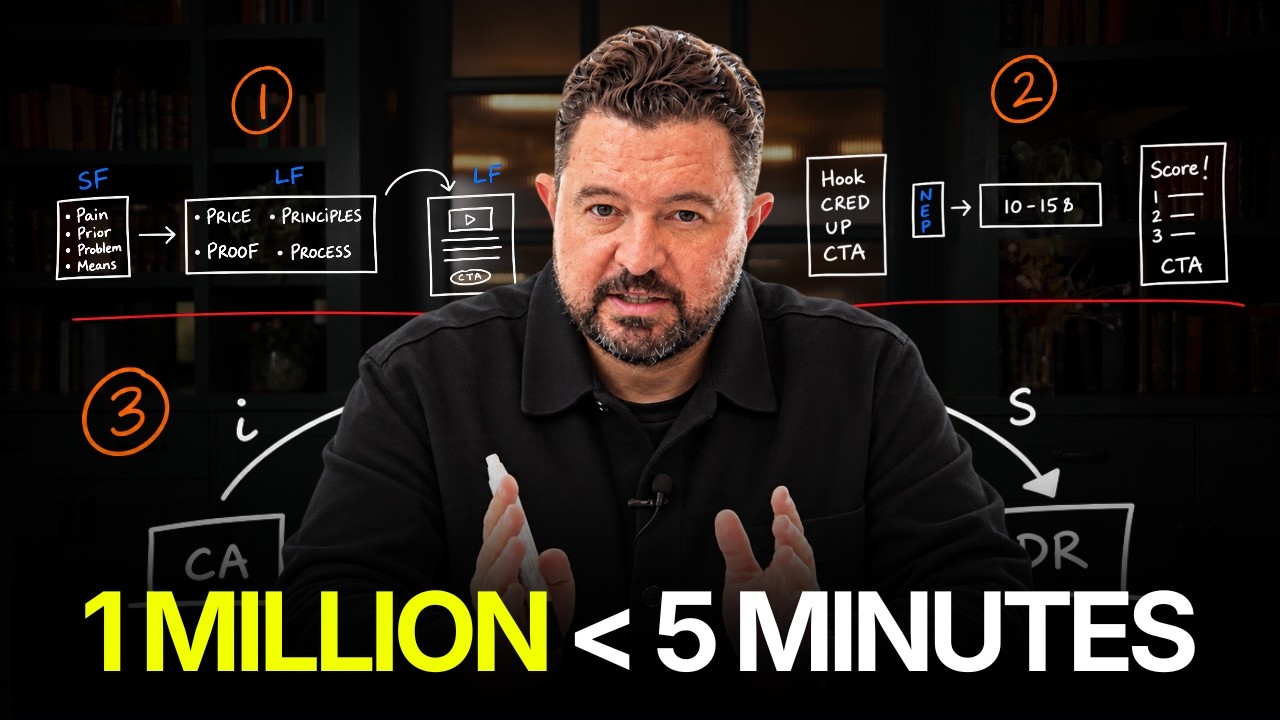
Instead of pointing the audience to a website or a follow up email, the coach put a QR code on the screen and asked people to complete a short online assessment during the coffee break. He told the room plainly that their answers would determine whether he could help them, and that he would follow up personally with anyone who qualified.
About half the room, roughly one hundred and fifty people, pulled out their phones and photographed the code. That single visual signal did something a slide deck never could. Everyone in the room saw how many hands went up at once, and it created a sense that spots were limited and in demand. Around sixty people completed the assessment during the break, and thirty of those were the right fit based on their answers: the right size of business, the right kind of frustration, and a genuine ability to invest in coaching.
From that shortlist of thirty, the coach signed all twelve available spots at his highest rate. He did not have to discount, chase, or convince anyone who was not already leaning in. Priestley points out that the assessment did the heavy lifting a generic pitch cannot: it gave the coach a reason-based way to say exactly why he could help each person, rather than making a generic promise and hoping it landed.
Building this kind of qualifying moment into a talk or a lead magnet is exactly the gap this breakdown of a fast client win also explores, and it is worth reading alongside this one if speed to close matters to your business.
Why urgency beat a traditional funnel
Conference attendees forget most of what they hear within a couple of days. By the time a typical follow up email arrives, the specifics of a forty five minute talk have blurred into the general noise of the event. Asking people to act inside the break, while the story was still fresh, avoided that decay completely.
There is also a social proof effect that a private funnel cannot replicate. When one hundred and fifty people pull out their phones at the same moment, everyone in the room registers it. Nobody wanted to be the person who missed the opportunity that clearly interested their peers. That shared, visible reaction did more to create urgency than any countdown timer or limited-time discount could have.
Building the assessment behind the moment
Priestley also walked through how quickly the assessment itself came together, using one of ScoreApp’s ready made templates rather than starting from a blank page. For a business coach, a template built around readiness to scale gave a solid starting point that needed only light editing rather than a full build.
The first changes were cosmetic: dropping in a logo, adjusting the primary colour to match the brand, and rewriting a few lines of copy so the language sounded like the coach rather than a generic template. From there, the questions themselves got a pass. Some were simplified into plain yes or no or sometimes options, and a maybe answer was reworded to something closer to “I need help with this,” which flags exactly the people who are open to support.
Two additions made the biggest difference to lead quality. An open text question at the end, phrased as an invitation rather than a requirement, let respondents add context in their own words. A multiple choice question asking what they were struggling with right now, whether that was cash flow, hiring, or stress, gave the coach a direct line into each person’s biggest pain point before any conversation happened.
- Start from a template close to your niche rather than a blank canvas
- Simplify question wording so it reads like plain conversation, not a corporate survey
- Add an open text question so people can share context beyond fixed answers
- Use a multiple choice question to surface the specific problem each person is facing
Turning answers into a personal next step
Once the questions were set, the results page became the next lever. Priestley added a short video to the results screen so respondents could put a face to the name before any call happened, alongside a direct link to book time in his diary. That single addition moved people straight from qualification toward a real conversation.
A more advanced version of the same idea uses dynamic results. Someone who flags hiring as their biggest issue can see a different call to action than someone who flags cash flow, each pointing at a relevant next step rather than a one-size-fits-all offer. This is the difference between a form that collects an email address and a diagnostic journey that interprets answers and personalises what happens next, which is the entire point of building an assessment rather than a static landing page.
For coaches and consultants specifically, this kind of structured diagnostic solves a problem that is hard to solve with a sales page alone. Coaching sells a transformation, and transformation is not tangible in the way a physical product is. A well built assessment gives a prospect a concrete, personalised reason to believe the transformation applies to them, before a single sales conversation takes place. Readers building out a wider quiz funnel strategy can find a deeper walkthrough in this guide to quiz funnel marketing, which covers how the same logic scales across different offers.
What this means for your next talk or webinar
The lesson here is not really about conference sponsorship. It is about pairing a moment of attention, whether that is a stage, a webinar, or a well timed LinkedIn post, with a mechanism that qualifies people while their interest is highest. A slide with a website address invites people to browse later and forget. A QR code that opens a short, relevant assessment invites people to act immediately and gives you a reason based follow up instead of a cold one.
Anyone attracting high paying clients through speaking, webinars, or referrals should look closely at this step by step approach to attracting premium clients, since it covers the follow up sequence that pairs well with the qualifying moment described here.
Priestley estimated the entire build took five to ten minutes for a rough version, with half an hour to an hour recommended for a first proper version before taking it live. That is a low bar for a tool that can replace weeks of manual follow up with a single afternoon of qualified conversations. Coaches, consultants, and anyone selling a service that is hard to picture in advance can build a quiz funnel with ScoreApp using the same template based approach, then adapt the questions to their own audience and offer.
Full calendars rarely come from more traffic alone. They come from knowing exactly who is ready to buy and giving that person a clear, personalised reason to say yes. A short assessment attached to the moment when attention is highest can do that work automatically, long after the original conversation is forgotten.