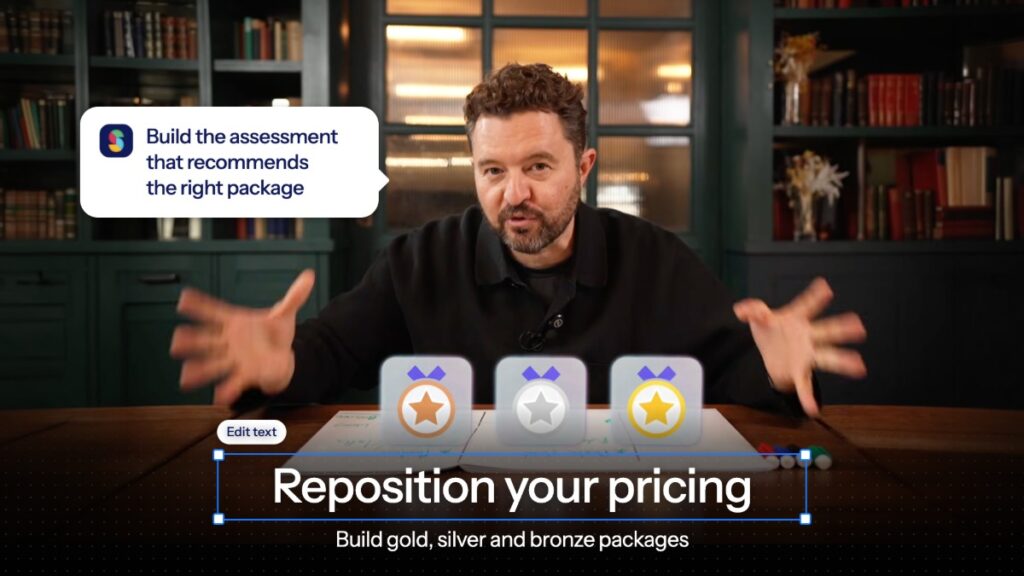
How do you position your pricing? Here’s how to build gold, silver, and bronze packages

Most service businesses sell one thing at one price. That gives buyers a binary choice: pay up, or do nothing. And “do nothing” wins more often than we’d like.
Three packages change that comparison. Here’s how to build them.
Start with gold, not bronze
Ask yourself: what would you offer if a client asked for an amazing package and could spend any amount of money?
In the video’s example, a fitness trainer normally sells 10 sessions at $60. For a gold tier, they might add supplements, a mindset coach, a dietitian, a before-and-after photo shoot, personal shopping for a new fitness wardrobe, a library of books, audiobooks, and podcasts, and an annual retreat.
Add up what it all costs, put your margin on top, and you have a gold package. In the example, it came to $10,000 every 90 days.
The key is what you didn’t do. You didn’t sell more sessions for more money. You packaged more of the things that get a better result.
Make silver the realistic middle
Silver is where you keep the low-hanging fruit and scale the rest down. The content library is easy to include. One mindset session on Zoom replaces five in person. One photo shoot replaces several. Shopping advice replaces the shopping itself.
Bronze is simply what you offer today.
Set the gaps wide
As a rule of thumb, double or quadruple the price between tiers. If bronze is $1,000, silver starts at $4,000 and gold at $16,000. You may not land there, but it stretches your thinking about what you’d include.
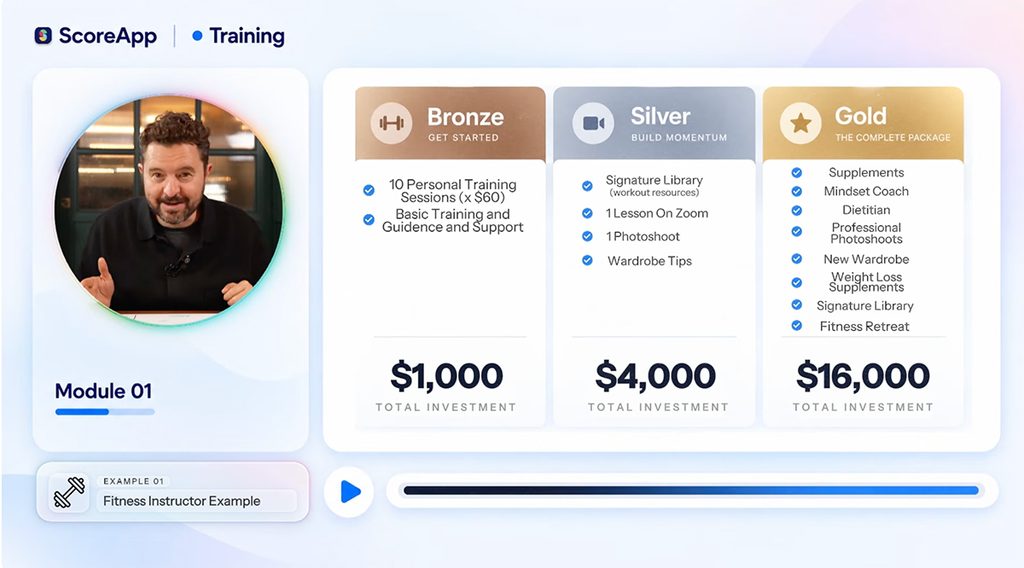
It also works through price anchoring. $16,000 might feel out of reach, but it makes $4,000 look reasonable. With only the $1,000 option, people compare it to doing nothing.
Add an assessment that recommends a package
Under your three tiers, add a line: “Still not sure? Answer 10–15 questions to find out which package suits you best.”
Ask about their situation, goals, and budget. An interactive assessment then tells them which package fits and why. Now buyers have five options: do nothing, bronze, silver, gold, or take the assessment. Fewer people fall through the cracks.
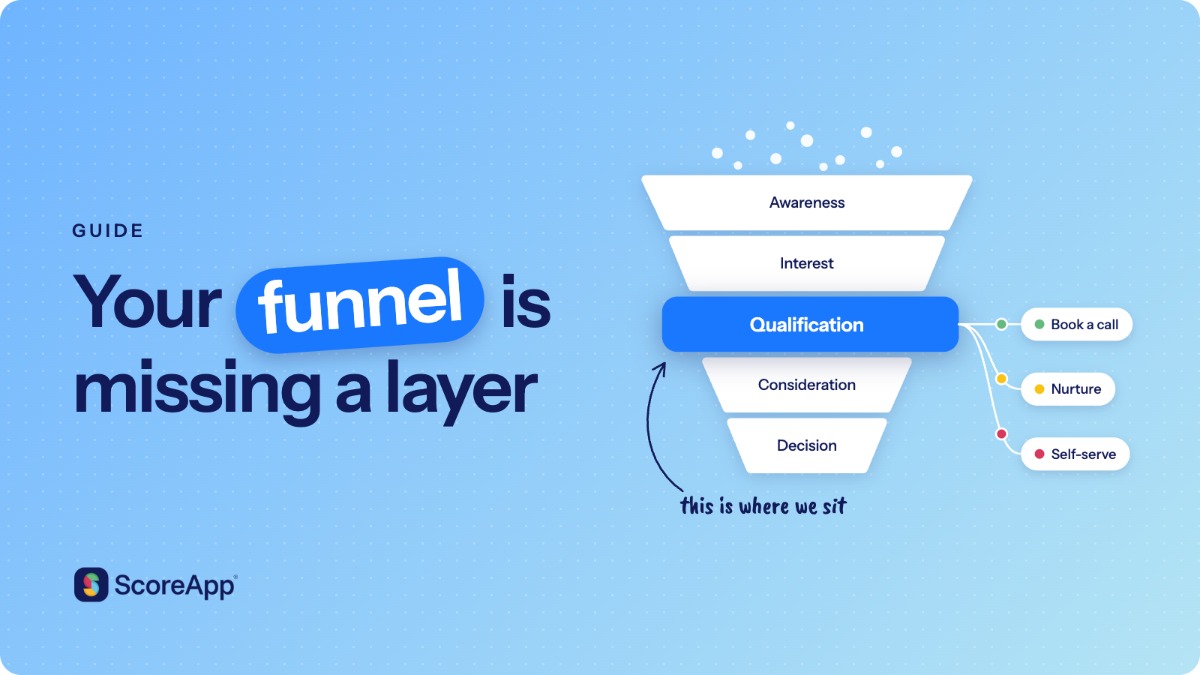
It’s the same logic behind qualifying better leads instead of chasing more of them: the buyer’s answers do the sorting before anyone books a call.
What happened when one entrepreneur tried it
In the video, we hear about an entrepreneur whose bronze tier was a $12,000 package. They launched a $72,000 package over three years, and more people showed interest in that than in the original one-year package.
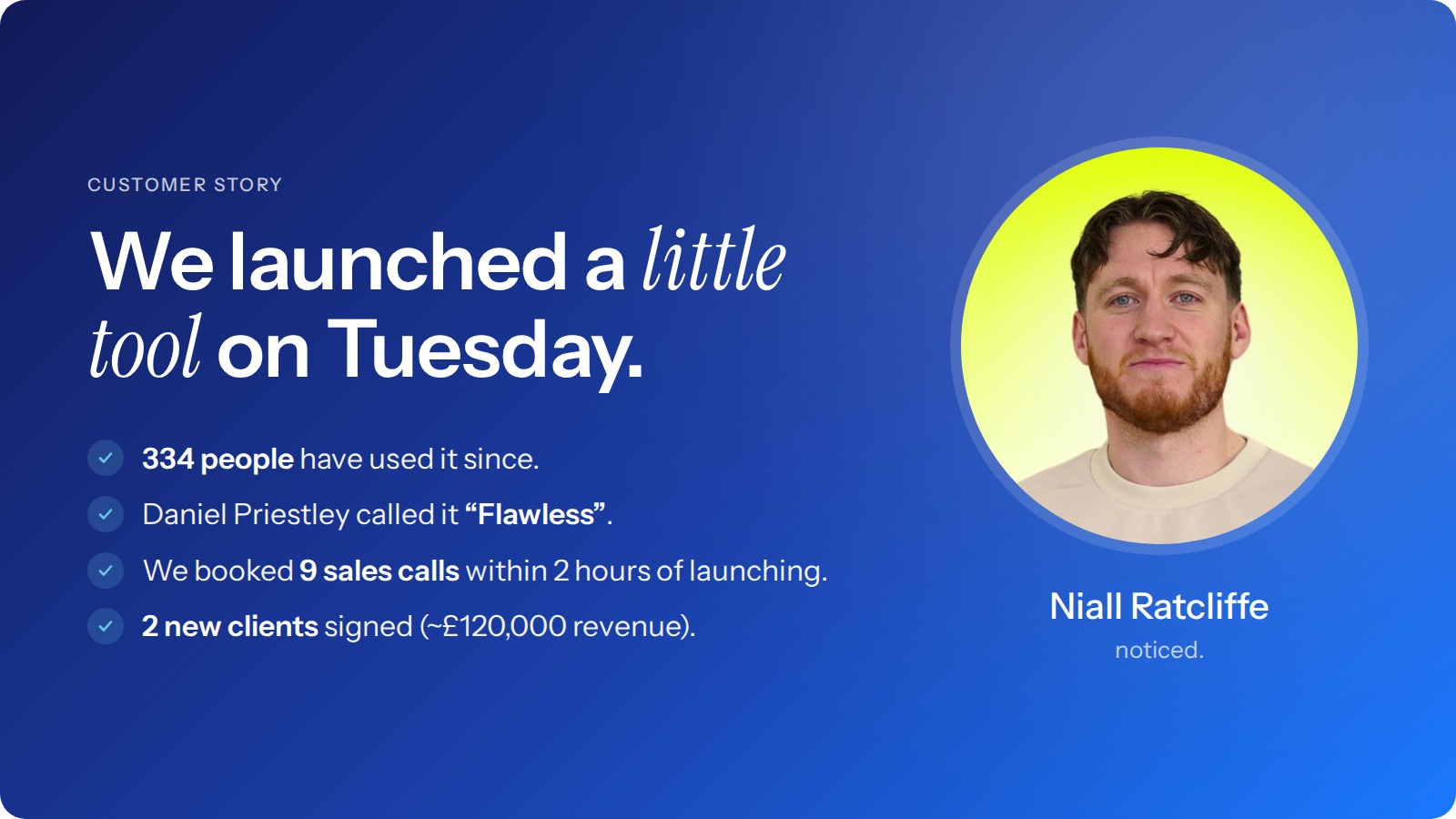
That’s one example, not a promise. But it shows how a higher tier can change what people think is possible. For a ScoreApp example of an assessment doing the qualifying, see how Niall turned one sales objection into £120k of new business.
Try it this week
Take a pen and paper and map out three packages. Bronze is what you sell now. Silver and gold take it further. Then build the assessment that guides people to the right one.
Build the assessment that recommends the right package
We built our software to qualify leads and reveal readiness with interactive assessments. Pick a plan, map your three packages, and let your assessment point each buyer to the right one.