How Many Qualified Leads Does Your Business Actually Need?

Most founders assume growth means chasing bigger numbers: more traffic, more subscribers, more inbound messages. A recent conversation inside a mastermind of over 120 entrepreneurs, many running seven, eight and even nine figure companies, pushed back hard on that assumption. The group spent an afternoon picking apart what actually moves revenue, and the answers were smaller and simpler than anyone expected.
Why a Handful of Leads Can Outperform a Flood of Traffic
The room included businesses already doing eight figures a year, and the surprising thread running through the discussion was that most of them did not need thousands of new contacts to double in size. Ten to thirty genuinely qualified conversations a month, arriving consistently, was enough to double revenue for several of the businesses represented. That number holds whether the goal is closing high ticket deals, signing distribution partners, or lining up influencer collaborations for an ecommerce brand.
That is a very different target than the volume-first mindset most marketing advice pushes. Chasing virality or blasting a message to tens of thousands of strangers can feel productive, but it rarely produces the kind of conversation that closes. Scale comes from consistency at a manageable number, not from a bigger megaphone.
What Actually Counts as a Qualified Lead
A lead only counts as qualified once several conditions line up: a real budget, a defined problem, a clear outcome in mind, some signal of intent, and enough research already done that they are close to ready to buy. Chasing raw volume without those filters produces a pipeline full of noise, not revenue.
This is where a structured scorecard earns its place ahead of a generic contact form. Instead of guessing who is ready from a name and email address, a scoring questionnaire can capture budget signals, timeline, and stated problems before a single sales conversation happens. ScoreApp is built around exactly that kind of diagnostic step, turning a simple quiz into a readiness filter rather than just another lead magnet.
Even businesses working through influencers or channel partners applied the same filter. Ten or thirty of the right influencer relationships, chosen deliberately rather than gathered at random, outperformed a scattershot outreach campaign every time the topic came up in the room.
The Beginner’s Mind Problem on Your Own Website
One of the sharpest moments in the session was a discussion of what the group called the beginner’s mind: the ability to look at your own website the way a total stranger would, rather than the way you see it after months or years of familiarity. Founders running eight and nine figure companies still fell into the trap of assuming a visitor understood context that was never actually spelled out on the page.
A related read on why generic marketing funnels are breaking down covers a similar blind spot: teams optimise the steps they can see instead of questioning whether the offer is even clear to a first-time visitor. If a stranger cannot explain in one sentence what a business does, who it serves, and why it matters, no amount of traffic will fix the leak.
Landing Page Mistakes Even Eight-Figure Businesses Still Make
Landing pages came up repeatedly, and the standard was blunt: a landing page is one page with one purpose and one clear call to action, built to turn traffic into clicks or leads. Several entrepreneurs in the room, some doing forty million pounds a year in revenue, had landing pages missing the fundamentals.
A Missing Hook
The most common gap was the absence of a single clear sentence near the top of the page explaining exactly what a visitor is about to get and why it matters to them specifically. Without that hook, visitors bounce before they ever reach the offer.
A Missing Video
The second gap was even more common: no video on the page at all. Adding a thirty second to two minute video can roughly double conversion, because leads arrive warmer once they have actually seen and heard the person or brand behind the offer rather than reading static text alone.
Try building a scorecard funnel with ScoreApp and pairing it with a short video introduction on the landing page itself, since the combination of a clear hook, a face on camera, and a qualifying questionnaire tends to convert better than any one of those elements alone.
Turning Fundamentals Into a Repeatable System
The through line across every principle discussed in the mastermind was the same: advanced tactics only work once the fundamentals are solid. Clear messaging, a manageable number of qualified leads, a way to filter those leads before a sales call, and a fast response once someone signals interest. None of that is complicated, but skipping it is exactly what quietly caps growth for otherwise strong businesses.
Businesses looking to put those fundamentals into a repeatable process can pair a qualifying scorecard with a fast follow-up workflow so that a ready buyer never sits in an inbox for days. The guide on answering the most common lead generation questions walks through several of the follow-up mechanics in more depth, and the breakdown of common lead generation mistakes is a useful checklist for anyone auditing an existing funnel.
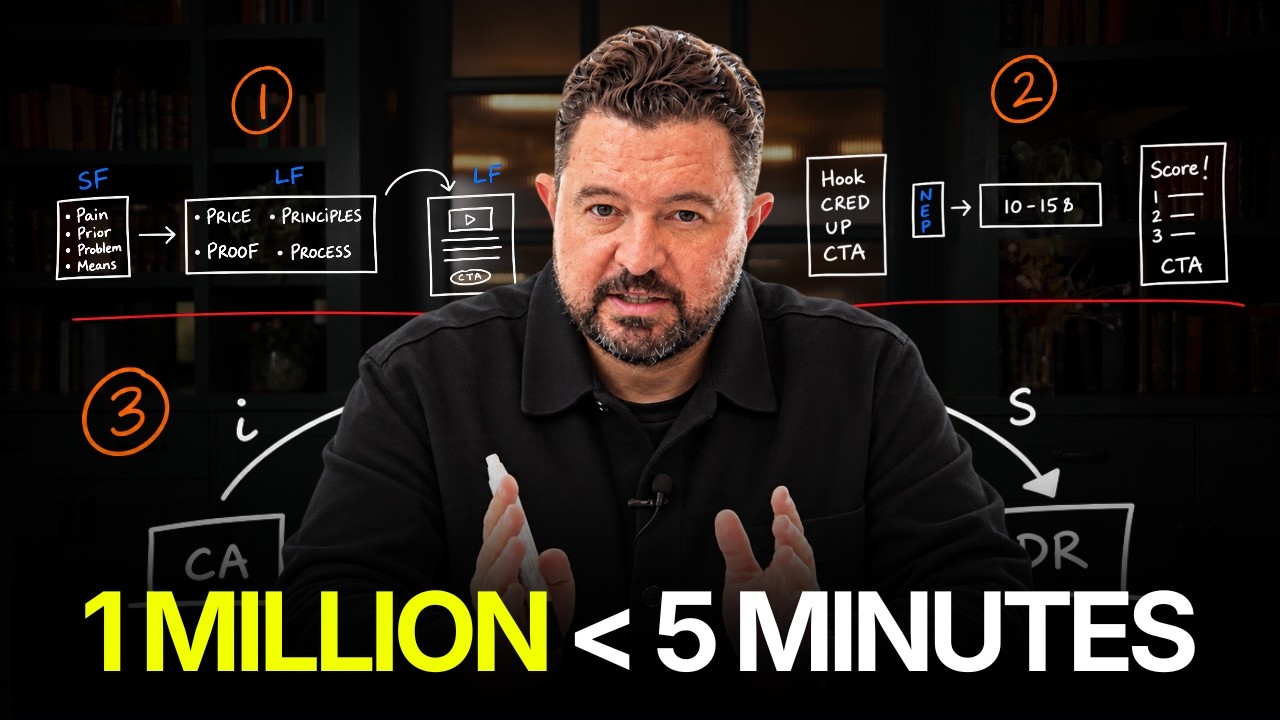
Daniel Priestley, ScoreApp co-founder, has spent twenty five years generating leads and revenue using the same principles covered in the mastermind session, and he built a free twenty minute breakdown of the exact landing page structure referenced above. It has already been reviewed by more than fifty thousand entrepreneurs looking to fix the same basic gaps.
Why Quality Only Shows Up After Quantity
One point that surprised several people in the mastermind was the idea that quality leads only come from a certain quantity of activity first. Nobody starts with a perfectly filtered pipeline. A business has to run enough conversations, enough campaigns, and enough test messages before the pattern of who actually converts becomes visible. Treating the first batch of leads as a discovery exercise rather than a final answer changes how founders react when early results look messy.
That reframe matters because plenty of businesses give up on a channel after one underwhelming batch of leads, when the real problem is a sample size too small to judge anything. Running a scorecard campaign for a few weeks, reviewing which questions correlate with closed deals, and adjusting the scoring logic accordingly produces a much sharper filter than trying to guess the right questions up front.
Applying This to Service Businesses and Consultants
Service businesses often assume these lessons apply mainly to ecommerce or software, but the same logic holds for consultants, agencies, and coaches. A coach only needs a handful of well matched clients a month to hit ambitious revenue goals, not a viral post. The constraint is rarely traffic. It is almost always a lack of a clear qualifying step between someone showing interest and someone booking a paid engagement.
A scorecard placed early in that journey, right after the first click from an ad or a social post, gives a service business the same kind of readiness signal an eight figure product company uses to sort partnership leads from casual browsers. The categories can be simple: budget range, urgency, and the specific outcome someone wants. Segmenting responses that way means outreach messages can be personalised from the very first email instead of a generic introduction that gets ignored.
None of this requires a large team or an expensive martech stack. It requires a clear offer, a landing page that explains that offer in one sentence, a short video that puts a face to the brand, and a scoring mechanism that filters interest before it reaches a calendar. Businesses that stack those four pieces together tend to see the qualified lead count rise even when total traffic stays flat, because the leads that do arrive are simply better matched.
A Practical Next Step
Before adding more traffic sources or increasing ad spend, audit the basics first. Check whether the homepage explains the offer in one sentence a stranger could repeat back. Check whether the landing page has a hook and a short video near the top. Then look at how leads are actually being qualified once they arrive, since a smaller number of the right conversations will do more for revenue than a wider net ever will.
Try ScoreApp free to turn that qualifying step into an automated scorecard instead of a static form, and start filtering for the ten to thirty conversations a month that actually move a business forward.