Stop Chasing More Leads. Start Qualifying Better Ones.

More leads. More calls. More proposals.
For most agencies, coaching businesses, and consultancies, that’s the default growth strategy. If conversions are low, the answer seems obvious: put more people into the top of the funnel and hope more comes out the bottom.
But here’s the problem with that logic. If you’re converting 10 to 20% of leads – which is where most service businesses sit – generating more leads doesn’t fix the underlying issue. It just means more of the same wasted time, more proposals that go nowhere, and more clients who weren’t really a fit.
The businesses that break out of that cycle aren’t the ones with the biggest ad budgets. They’re the ones who’ve built a proper lead qualification process – one that filters out the right clients early, routes them intelligently, and means every sales conversation is worth having.
In this guide, we’ll walk through what lead qualification actually means, why it matters more than lead volume, and how to build a system that does the heavy lifting for you.
What is lead qualification?
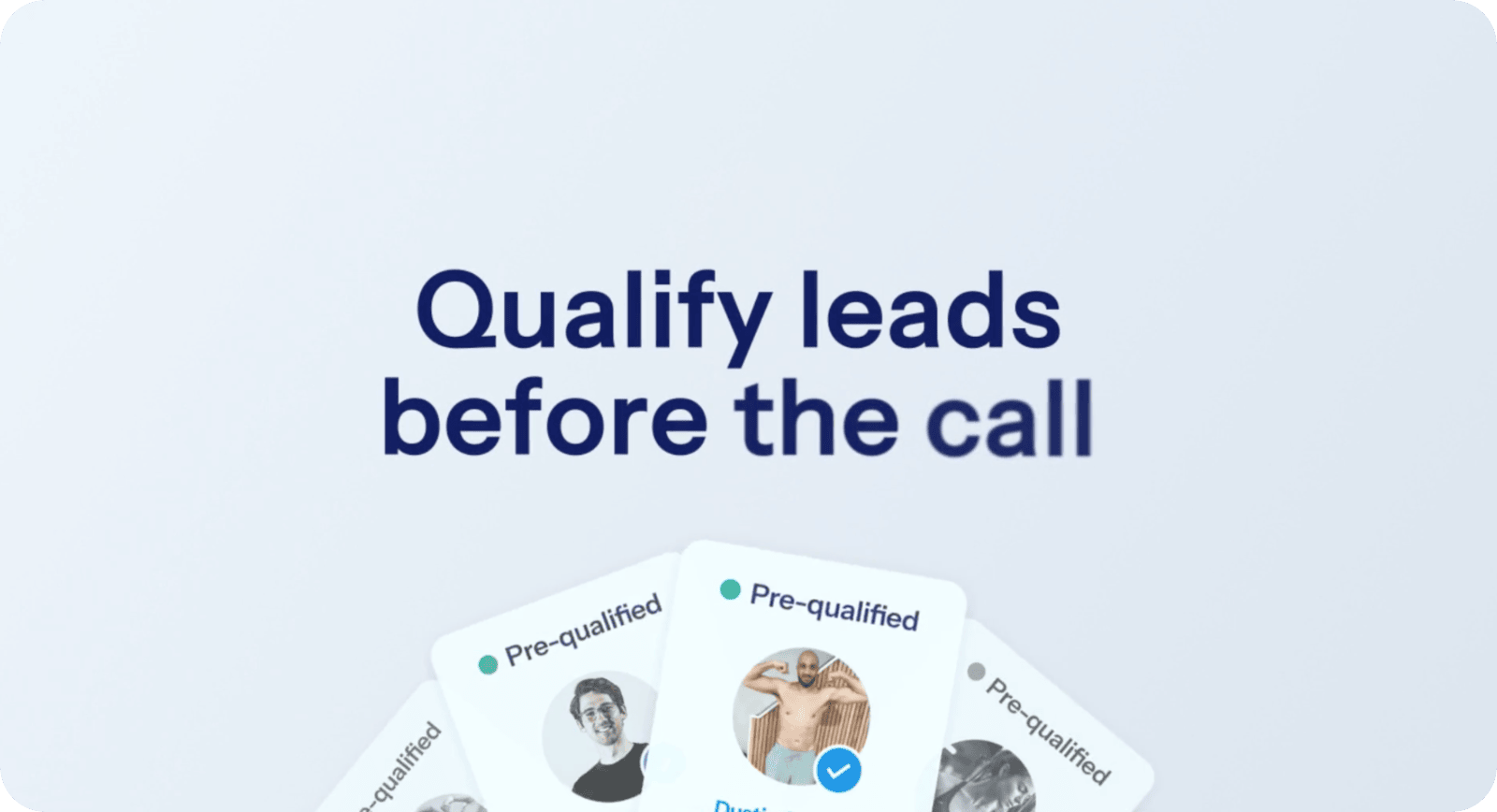
Lead qualification is the process of determining whether a prospect is a good fit for your product or service – before you invest significant time in them.
A qualified lead isn’t just someone who expressed interest. It’s someone who has the right problem, the right budget, the right mindset, and the readiness to take action. For service businesses, where every client relationship is an investment of time and energy, that distinction matters enormously.
Most businesses do some version of qualification informally – on the first call, through back-and-forth emails, or even just by gut instinct. The trouble is that informal qualification is inconsistent, time-consuming, and often happens too late. By the time you realise someone isn’t the right fit, you’ve already spent hours on them.
A structured lead qualification process changes that. It collects the right information upfront, scores prospects against clear criteria, and ensures you’re only investing deep time in the people most likely to become great long-term clients.
Why most service businesses have a lead qualification problem
It’s not that agencies, coaches, and consultants don’t care about client quality. Most of them care deeply. The problem is structural.
When you need revenue, you take what comes. When your pipeline feels thin, you treat every inbound enquiry as a potential client worth pursuing. Over time, that creates a business full of mixed-quality client relationships – some excellent, some draining, and a lot somewhere in the middle.
The knock-on effects are significant:
- Your best work goes to clients who may not appreciate or retain it
- Difficult clients consume a disproportionate amount of time and energy
- Early churn forces you back into lead generation before you’ve had a chance to deliver real results
- Sales calls feel like a gamble rather than a process
The answer isn’t to generate more leads. It’s to get better at identifying which ones are actually worth pursuing – and building a system that does that automatically.
What good lead qualification looks like in practice
Effective lead qualification starts long before the first sales call. It begins with a clear picture of what a perfect-fit client actually looks like.
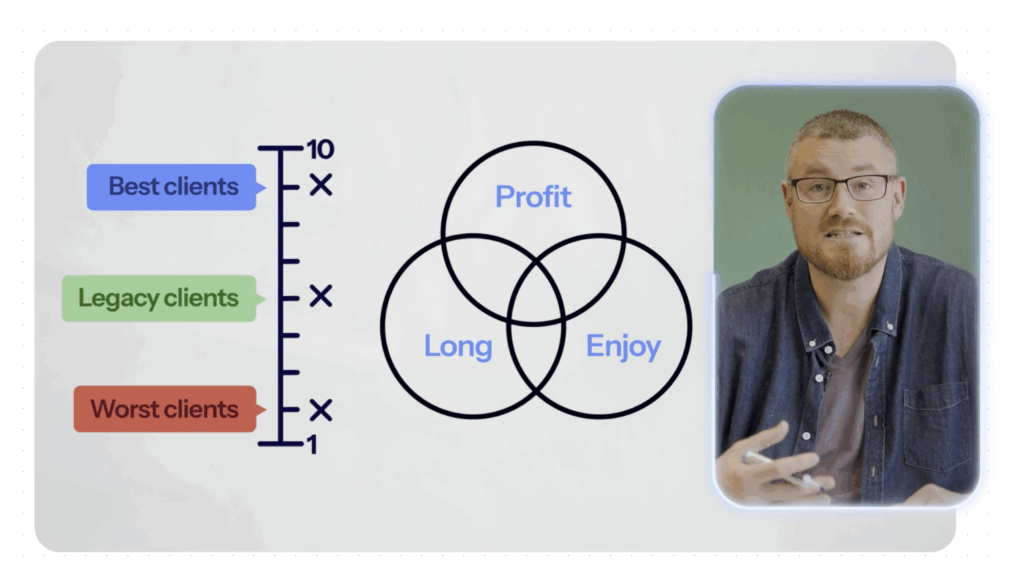
Think about your best past clients. Not just the most profitable ones – though profit matters – but the ones you’d clone tomorrow if you could. The ones your team enjoyed working with. The ones who stayed, grew, and became case studies.
Three things tend to separate ideal clients from everyone else:
- Profit – Are they a strong margin? A client who is both difficult and unprofitable is the clearest possible signal.
- Enjoyment – Does your team get energised by this client? Do they bring creativity and care to the relationship?
- Longevity – Are they the kind of client who stays for the long term? Who grows with you, values the relationship, and becomes an advocate?
Once you have a clear picture of who your ideal client is, you can start building a qualification process that screens for them consistently.
The lead qualification questions that actually predict client success
Most enquiry forms ask for a name, email, and maybe a message. That tells you almost nothing useful.
A well-designed lead qualification process asks questions that reveal whether a prospect is genuinely a good fit before you ever get on a call. The questions that tend to predict success most reliably fall into a few key areas:
Problems and pain points
What are they struggling with right now? Look back at your best past clients and your worst ones – the answers will look very different. Specific, clearly-articulated problems are a strong signal. Vague frustration or unrealistic expectations are a warning.
Goals and desired outcomes
What does success look like for them in six or twelve months? Ambitious but realistic goals, grounded in their actual business, are a good sign. Goals that don’t align with what you deliver – or that suggest a misunderstanding of what’s involved – are worth flagging early.
Budget and current spend
What are they currently investing in marketing, coaching, or the service you provide? And what would they be willing to invest with you? A business turning over seven figures but allocating almost nothing to the area you work in is a different prospect to one that’s already spending and wants to scale.
Team and resources
Who will you actually be working with? Understanding company size, internal resource, and how many stakeholders are involved helps you price accurately and set realistic expectations before the relationship starts.
Urgency and readiness
How ready are they to take action? This isn’t always a straightforward positive signal – someone who needs to start immediately and has no time for a proper discovery process can create as many problems as someone who’s perpetually “not quite ready.”
Collecting this information before the first call means you arrive at every conversation already knowing whether it’s worth having – and exactly where to focus your time.
How to score and prioritise your leads
Collecting qualification data is only useful if you act on it consistently. That’s where a scoring system comes in.
The simplest and most effective approach is a three-tier model – often called a traffic light system. Based on how a prospect answers your qualification questions, they get assigned a score that determines how much time you invest:
- Low fit (Red): A short initial call – enough to confirm your instincts and either rule them out or look for signs you’ve scored them wrong. No more.
- Possible fit (Amber): A longer conversation to explore the areas of uncertainty. Good signals mixed with a few unknowns that need unpacking.
- Perfect fit (Green): Your full attention. A proper discovery conversation, treated as the beginning of a long-term relationship.
This alone transforms how you allocate your time. Instead of every inbound lead getting the same level of attention regardless of fit, you’re investing your energy where it’s most likely to lead somewhere meaningful.
When this is built into an automated system – where leads score themselves through a scorecard and are routed to the right booking link automatically – it takes almost no additional effort from your team. The qualification happens in the background, and you only ever show up to conversations that are worth having.
Why better lead qualification leads to higher conversion rates
There’s a common misconception that a high conversion rate is about being a better salesperson. In reality, for most service businesses, conversion rate is primarily a function of lead quality.
When you’re speaking only to well-qualified prospects – people who have the right problem, the right budget, and the right readiness – the conversation changes entirely. You’re not trying to convince someone who’s on the fence. You’re helping someone who already fits to take the next logical step.
Service businesses with a strong qualification process in place routinely see conversion rates of 60 to 80% on qualified leads – compared to the 10 to 20% typical of businesses treating all enquiries the same.
The other effect – which is often overlooked – is what happens to client quality downstream. When you’re consistently bringing in clients who were a genuine fit from the start, retention improves, referrals increase, and the work itself gets better. Your team are energised rather than drained. Results compound.
The paid discovery step that closes more retainers
One of the most effective tactics used by high-converting agencies and consultancies is a paid strategy session before any retainer or ongoing engagement.
Rather than jumping from discovery call to proposal to retainer, you introduce an intermediate step: a focused, paid engagement – typically a few thousand pounds – where you spend time genuinely understanding the client’s business before making a recommendation.
This approach works for several reasons.
First, it filters out anyone who isn’t serious. A prospect who won’t invest in a strategy session before a retainer is showing you exactly how they’ll behave as a client.
Second, it protects both parties. You’re not recommending a package without fully understanding what the client actually needs. They’re not committing to an ongoing relationship before they’ve seen how you think and work.
Third, it builds trust. Presenting a clear, honest plan – one that says “here’s what we’d recommend regardless of whether you work with us” – is a powerful demonstration of confidence and expertise. By the time you make a retainer recommendation, the client already knows how you work, trusts your thinking, and can see the value ahead.
Businesses that implement this step consistently report conversion rates into retainers of 70 to 80% – not because of better selling, but because by that point, the relationship has already been established.
How to automate your lead qualification process with ScoreApp
Building a lead qualification process manually – asking questions on calls, scoring by hand, routing leads to different diary links yourself – is possible. But it’s slow, inconsistent, and hard to scale.
ScoreApp is built specifically to automate this process from end to end.
Here’s how a typical qualification funnel works inside ScoreApp:
- A prospect lands on your scorecard – a branded, interactive experience that asks your qualification questions in a structured, engaging way.
- Their answers are scored automatically against the criteria you’ve set. ScoreApp segments them based on their fit – no manual work required.
- Each segment is routed to a personalised results page and the appropriate next step – whether that’s a 15-minute call, a full discovery session, or a nurture sequence for leads who aren’t quite ready yet.
- Before every call, you can review the prospect’s answers in your ScoreApp dashboard. You arrive already knowing their situation, their budget, their goals – and how well they fit.
- Their data flows into your CRM and email platform automatically, triggering the right follow-up sequences for each segment.
Because ScoreApp uses zero-party data – information your prospects give you directly, in their own words – every conversation is grounded in what they actually told you, not what an algorithm inferred from their behaviour.
The scorecard itself also functions as a lead magnet. Rather than asking people to fill in a generic contact form, you’re giving them something worth completing: a clear picture of where they stand and what good looks like. That changes the quality and intent of the people who come through.
Key takeaways: building a lead qualification process that works
If there’s one shift worth making in how you approach lead generation, it’s this: stop optimising for volume and start optimising for fit.
- Define what a perfect-fit client looks like, based on your best existing client relationships.
- Ask qualification questions that reveal problems, goals, budget, team, and readiness – before the first call.
- Score every lead against clear criteria and route them to the right level of attention.
- Use a paid discovery step to build trust, protect both parties, and convert the right clients at a higher rate.
- Automate the whole process so qualification happens consistently, without adding work to your team.
You don’t need more leads. You need a clearer view of which ones are worth your time – and a system that gives you that clarity automatically.
Ready to qualify leads smarter?
ScoreApp gives agencies, coaches, and consultancies everything they need to build a professional lead qualification process – from the scorecard and scoring logic through to automated segmentation, personalised results pages, and CRM integrations. Try ScoreApp free for 14 days and see how a qualification-first approach changes the quality of every sales conversation you have. Get started here.