How to stop guessing and start qualifying: the system behind high-clarity businesses

Why most entrepreneurs are busy but not growing
There’s a pattern that shows up again and again in conversations with entrepreneurs who feel stuck. They’re not lazy. They’re not short of ideas. They’re doing the calls, sending the follow-ups, showing up on social. And yet the growth isn’t matching the effort.
The problem isn’t activity. It’s clarity.
Specifically, it’s the absence of a system that answers one question before anything else: who is actually ready to work with me?
Without an answer to that question, everything downstream suffers. Discovery calls fill up with people who were never going to convert. Follow-up goes to a list that isn’t segmented. Marketing generates traffic, not traction.
The businesses that break out of this cycle aren’t working harder. They’ve built something that does the qualifying for them – before they pick up the phone.
What “growth clarity” actually means
Growth clarity isn’t a mindset. It’s a practical outcome of having the right information at the right time.
A business with growth clarity knows three things before a conversation starts:
- Whether a lead has the problem they solve
- Whether that lead understands their situation clearly enough to act on it
- Whether they’re at a stage where investment makes sense
When you have that information, sales becomes a different kind of conversation. You’re not trying to convince someone they have a problem – they’ve already told you they do. You’re not wondering if the timing is right – they’ve already indicated it is.
The businesses scoring highest in our benchmark for growth clarity have one thing in common: they’ve built a system that collects this information automatically, before any human time is spent.
How to build it: the qualifying assessment
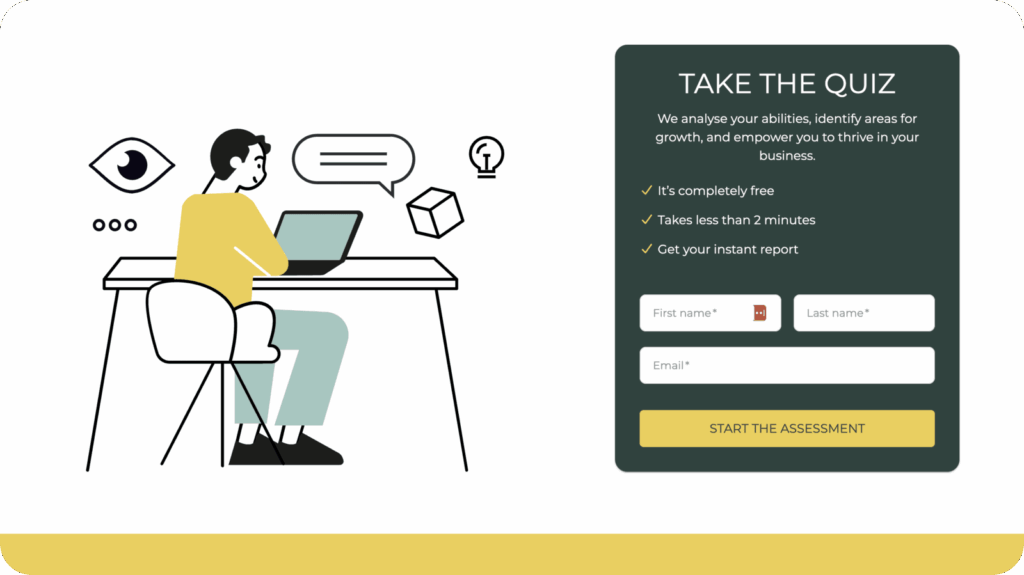
The most effective version of this system is an interactive assessment – a set of carefully chosen questions that a potential client answers before they ever reach your calendar.
Done well, it does four things at once:
- It attracts the right people
An assessment positioned around a real problem your audience has (“How ready is your business to scale?”, “Where are the gaps in your sales process?”, “How does your leadership model compare to your growth stage?”) works as a lead magnet because it promises something genuinely useful: self-knowledge and a benchmark. - It qualifies before you have to
The responses tell you, automatically, whether someone is a good fit. You can score answers and segment leads based on their results – so your time goes to the people who score highest for readiness, not just whoever books first. - It starts the conversation in the right place
When a lead arrives having already answered your diagnostic questions, the conversation is different. They’ve reflected. They’ve identified their gaps. They’re not starting from zero – and neither are you. - It runs without you
Once it’s live, it works while you’re delivering to existing clients. It doesn’t need you to be in the room. That’s the shift from guesswork to system.
What to put in your assessment
The questions that work best are ones that reveal readiness, not just interest. A few principles:
Ask about situation, not desire. “How many discovery calls do you run per week that don’t convert?” tells you more than “Are you looking to grow your business?”
Ask about awareness. Someone who can clearly articulate their problem is much closer to being ready than someone who has only a vague sense that something isn’t working.
Ask about urgency and resource. Readiness isn’t just about having the problem – it’s about being in a position to address it. Questions about timeline and investment capacity help you prioritise without having that conversation live.
Keep it to 8–15 questions. Short enough to complete, rich enough to be genuinely diagnostic.
Turning responses into a qualifying system
Once you have the questions, the next step is scoring. Assign values to responses so that leads with the highest scores – those who are most ready – surface to the top of your list automatically.
Most assessment tools, including ScoreApp, let you do this without any technical setup. You define what a high-readiness lead looks like, and the platform does the sorting for you.
The result is a simple, actionable view of your pipeline: who’s ready now, who needs nurturing, and who probably isn’t the right fit. No guesswork. No wasted calls.
The benchmark analogy

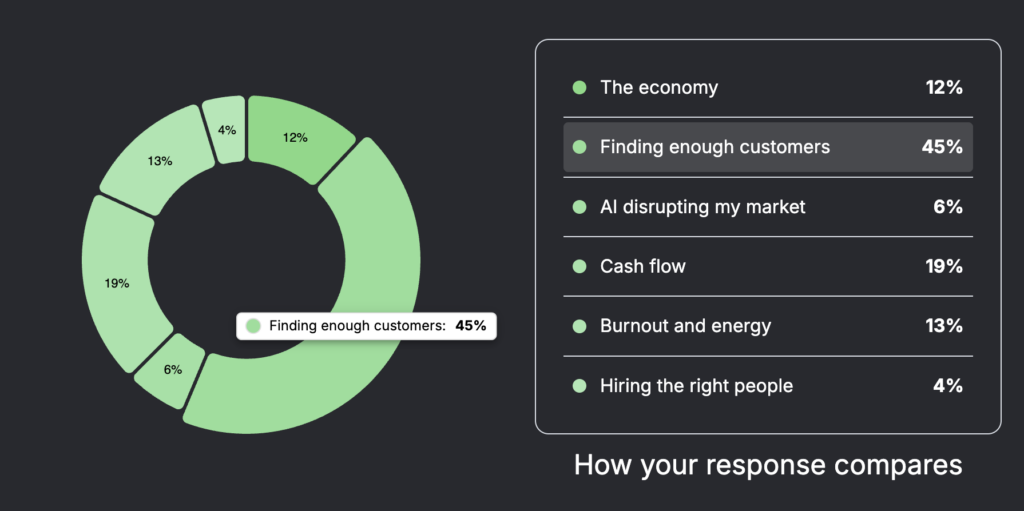
Think about what you just experienced with the Daniel Priestley benchmark survey (take the survey here, if you haven’t taken the survey yet).
You answered a set of questions. You got a score. You saw where you stood against your peers. That combination – self-reflection, a result, and a comparison – is what makes a well-built assessment compelling to complete.
Your leads feel the same pull. The difference is that when they complete your assessment, you’re the one who sees the data. You know what they’re struggling with before you ever speak to them. That’s not a small advantage.
Where to start
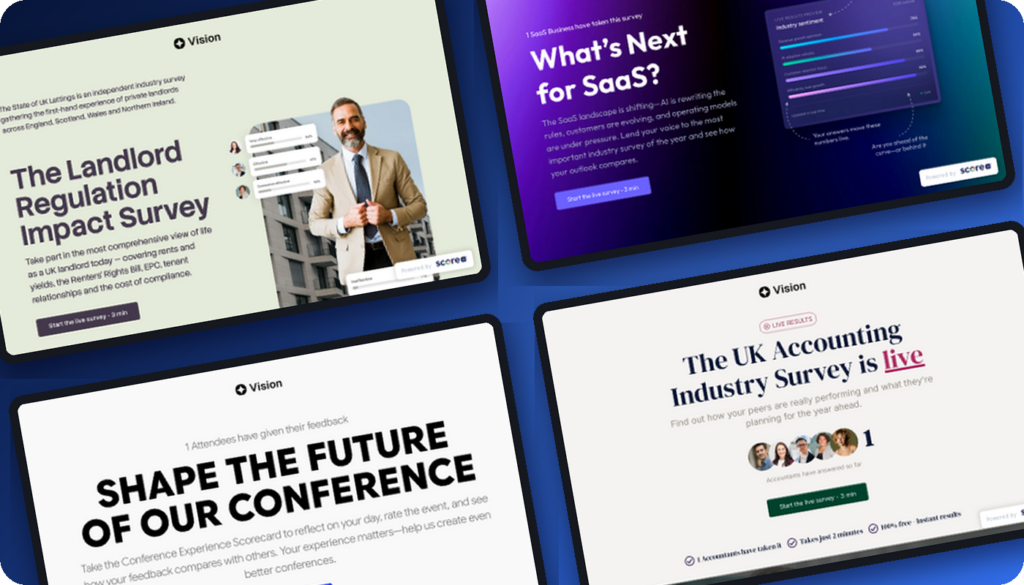
Building a qualifying assessment from scratch takes time if you’re working from a blank page. The faster route is to start from a template built for your type of business and customise from there.
ScoreApp has a library of templates designed for professional services, coaching, and advisory businesses – lead qualifiers, client readiness assessments, business benchmarks. Most can be live within a day.
If you’ve been running on referrals and intuition and want to replace that with something more systematic, a qualifying assessment is the most high-leverage thing you can build.