
Most businesses still plan their marketing around a funnel that stopped working years ago. They set up ads, send traffic to a landing page, offer a lead magnet, and wait for a purchase decision that increasingly never arrives. Daniel Priestley, entrepreneur and ScoreApp co-founder, argues that this rigid structure has been replaced by something far less linear, and businesses that keep forcing prospects down a narrow chute are losing ground to those who don’t.
Why the Old Funnel Stopped Converting
Priestley is upfront that he dislikes the word funnel itself. The term implies people are pushed through a fixed path against their will, avoiding every other option until they pop out the other end ready to buy. He keeps using it because it remains common shorthand across marketing and sales, but he prefers to think in terms of journeys and experiences rather than forced movement through a pipe.
That shift in language matters because buyer behaviour has genuinely changed. People no longer fear missing out on a single offer. If a landing page feels like pressure, they simply click away, confident they will encounter the brand again somewhere else online. Any strategy built on scarcity and a single narrow path now works against the business using it.
The New Top of Funnel Runs on the 7-11-4 Rule
Discovery today happens through content, not cold advertising. Priestley points to a working rule he calls 7-11-4: seven hours of exposure, eleven interactions, across four platforms, before someone properly registers that a brand exists. Within that, the number that matters most is eleven touches inside a 90-day window.
Post once a month and most people will never consciously remember the brand at all. Post daily and Priestley’s data suggests it takes under two weeks before someone starts to recognise a name and a face repeatedly showing up in their feed. That is the minimum effective dose for discovery, and it means consistent short-form content across several platforms is no longer optional for anyone trying to build demand.
Trust builds on top of that discovery layer, typically after two to seven hours of accumulated exposure to a person’s or brand’s work. That trust-building stage calls for longer content: an in-depth video, a longer article, a report, or a book. Priestley also highlights third-party collaborations, such as guest appearances on established podcasts or channels, as a shortcut. He calls this trust transference: when an audience already trusts one creator, some of that trust passes to anyone that creator introduces, which is why appearing on a respected platform can accelerate credibility faster than posting alone ever could.
Winning the Messy Middle
Once someone knows a brand exists, they rarely follow a single tidy path toward a purchase. Priestley references Google’s research on what it calls the messy middle, the stage where people bounce between an e-commerce store, an educational article, an event registration, and an online assessment, engaging with whichever piece feels relevant at that moment. He describes this stage as a playground rather than a corridor: visitors can go on the slide, the swings, or the monkey bars in whatever order suits them, and they should never feel like they are being funnelled toward a single forced outcome.
Interactive assessments are one of the strongest pieces to place inside that playground, because they invite genuine engagement rather than passive scrolling. A tool like ScoreApp lets a business turn a simple set of questions into a scorecard that segments visitors by their actual answers instead of guessing from clicks and page views, which gives the messy middle stage something concrete to convert casual interest into a qualified, warmer lead. Businesses that want a fuller walkthrough of how that scorecard-led approach fits into lead generation can read Daniel Priestley’s scorecard method for lead generation.
The businesses winning attention right now are treating this stage as an ecosystem of options: webinar replays, mini-courses, downloadable guides, and assessments all sitting alongside each other, all loosely connected, none of them forced. Visitors bounce back up to social media and back down into these assets repeatedly, and each pass builds a little more familiarity and trust before anyone talks about price.
Why Live, Synchronous Moments Still Close the Sale
After discovery and the messy middle comes what Priestley still calls the bottom of the funnel, even though he is quick to note it looks nothing like the rigid final stage marketers used to picture. What actually closes deals now, in his view, is a curated live moment: a one-to-one diagnostic call, a one-to-one strategy session for a highly qualified prospect, or a live workshop with as many as a hundred people.
These synchronous experiences work because they demand commitment. A webinar, a Zoom call, a physical meetup, a sales conversation, or even a private dinner all require someone to show up at a specific time, which filters out casual browsers and leaves only prospects who are seriously considering the offer. Priestley describes this as the point right before a purchase happens, and he treats it as the piece most businesses under-invest in while over-investing in cold traffic and static landing pages.
Turning the Framework Into a Working Marketing Playground
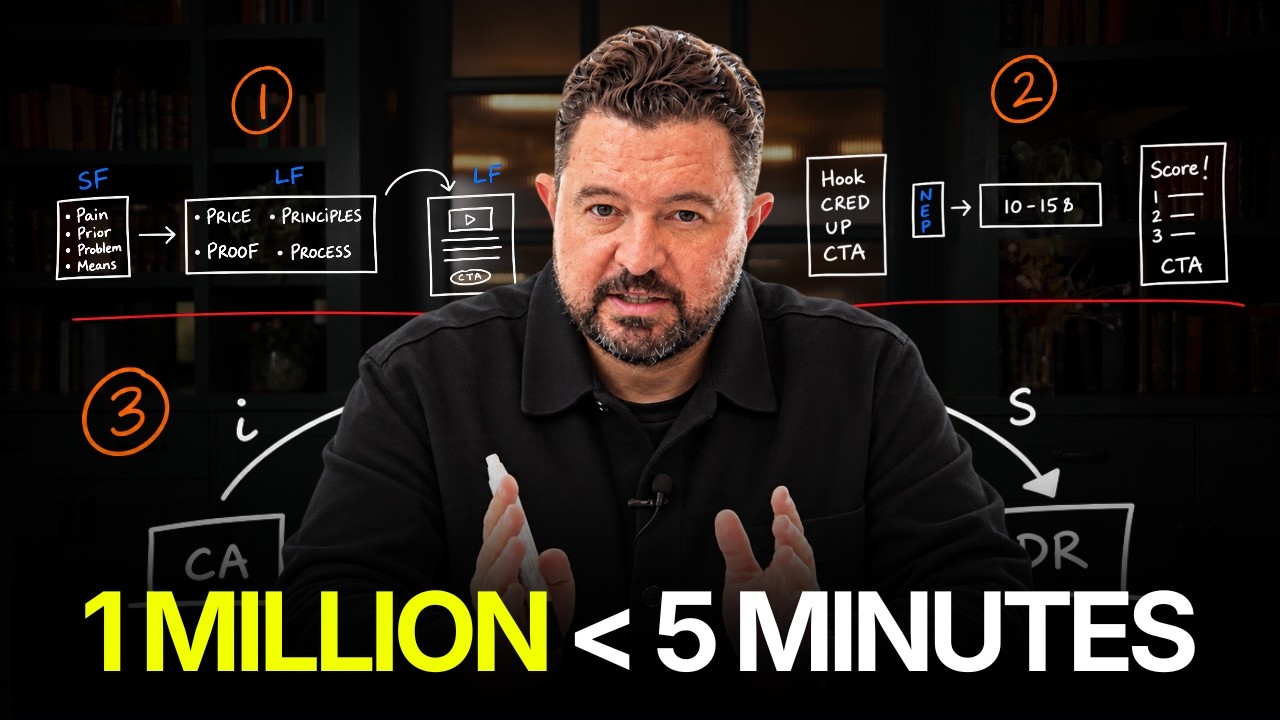
Put together, Priestley’s model runs in four stages: short-form content for discovery, long-form content and third-party collaborations for early trust, a messy middle full of assets people can explore at their own pace, and a live synchronous moment that precedes the purchase. None of it works as a straight line, and businesses that try to force a straight line through it tend to see people disengage.
Most businesses already have pieces of this system without realising it. A founder posting daily on LinkedIn is quietly building the 11-touches-in-90-days pattern. A brand that already produces a newsletter or a long-form video series has the trust-building layer half built already. What tends to be missing is the connective tissue in the middle, the specific assets that let someone move from casually following a brand to actively raising their hand as a qualified prospect. Without that middle layer, discovery and trust just stall out, because there is nowhere obvious for interest to go next.
Building that messy middle from scratch is often the hardest part, since it means having more than one asset ready for people to engage with. Businesses that want a simple way to test this without a full content library can look at how AI quiz funnels turn leads into real assets, since a single interactive scorecard can double as both an educational touchpoint and a qualification tool. For businesses still relying on a single static lead magnet, it is worth comparing that approach against how to create an effective lead magnet that actually holds attention long enough to build trust.
Zero-party data, meaning information a prospect volunteers directly through their own answers, sits at the centre of why this works better than behavioural guesswork. Instead of inferring intent from a click or a page visit, a scorecard captures what someone actually says about their situation, which makes segmentation sharper and follow-up conversations far more relevant. That is the distinction between a form that just gathers contact details and a diagnostic experience that reveals fit, readiness, and the right next step for each visitor.
For businesses ready to rebuild their own version of this playground, starting with a free scorecard is a practical first move, since it can slot into the messy middle immediately without months of content production first.
The takeaway from Priestley’s breakdown is not that content, ads, or lead magnets are dead. It is that businesses need to stop expecting a single linear path to do all the work. Consistent short-form content builds recognition, longer content and collaborations build trust, a playground of engaging assets keeps people warm, and a live synchronous moment closes what everything before it started. Businesses that map their own marketing against these four stages, rather than a single rigid funnel diagram, tend to find the gaps that are actually costing them customers.
A useful exercise for any marketing team is to sketch out where a prospect currently sits at each of these four stages and be honest about the gaps. Some businesses are strong on short-form discovery but never give anyone a genuine reason to engage further. Others have plenty of long-form trust content but no live moment where an actual conversation can happen. Naming the weakest stage first, rather than adding more content everywhere at once, is usually the faster way to close the gap between casual attention and a paying customer.