How one creator turned a viral reel into 177 leads


At the end of October, Belle (@growithbelle_) had a reel take off on Instagram. That happens to plenty of creators. What happened next doesn’t.
Instead of letting the attention fade into a bigger follower count, she sent it to her scorecard. In under two weeks, 297 people visited it and 177 finished it – each one leaving behind their answers, their score, and a clear picture of where they’re at.
Here’s the reel that started it:
If you’ve wondered how to turn viral traffic into leads, this is a clean example. Here’s what she did, what it produced, and how to set up the same thing before your own spike arrives.
The results
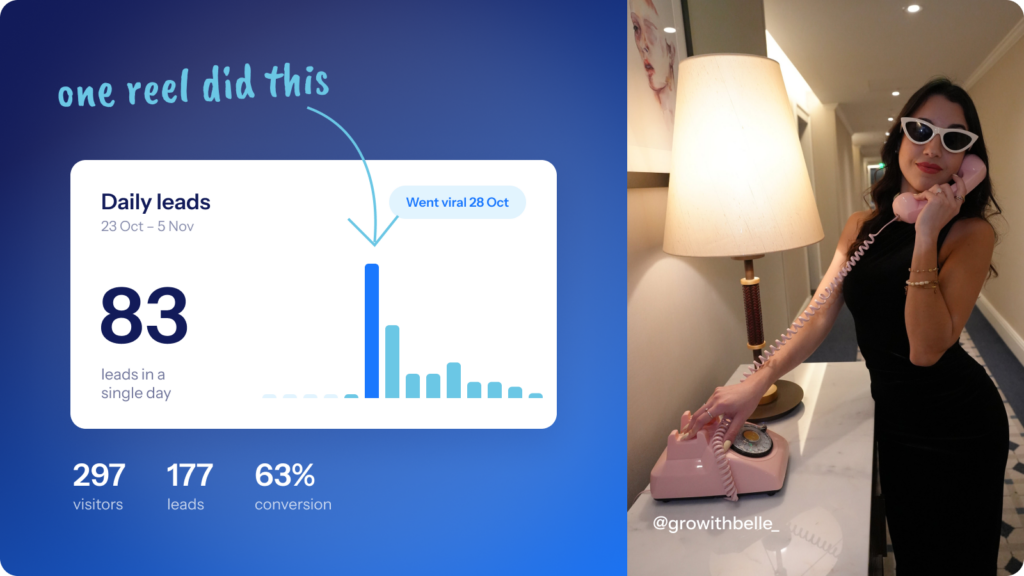
- 83 leads in a single day (28 October)
- 177 leads, from almost none the week before
- 297 visitors to her scorecard
- 63% conversion rate
- 3 minutes 38 seconds average completion time
That last number matters. People didn’t skim and bounce. They spent more than three and a half minutes answering questions about their own goals – which tells Belle far more than a like or a follow ever could.
What she built
Belle’s scorecard, the Blind Spot Quiz, asks a question her audience already cares about: what’s the real gap between you and your goals?
Her content is about personal growth and leveling up, so an assessment that shows people what’s been holding them back is a natural next step from a reel – not a hard sell. People answer a short set of questions, get a personalized result, and Belle learns what each person is working toward. That’s the power of an interactive assessment: the lead tells you about themselves, in their own answers.
How she got the reel to take off
Belle has 12 years in marketing, and she shared her playbook after the spike. In short:
- Volume. She posted three times a day, sometimes five. In her words, it “allowed me to test quicker than I ever have and helped the algorithm understand who my target audience is.”
- Trial reels. Instagram’s trial reels go only to non-followers, so she could repost a video that was working with one change – and learn what made it work in the first place.
- Done over perfect. At that volume, there’s no bandwidth to worry about the perfect shot. Chasing perfect, she says, stunts your growth.
- Shares and saves over views. She made content people want to send to a friend or come back to later, so it kept working long after the first watch.
- Audience first. She described the lessons she’d learned using the exact words her audience uses.
- Analytics. She used the Edits app to get feedback on every part of each video, from the hook to the call-to-action, and let the data guide the next one.
Her own summary: “If you do these things, not once, but consistently, there is no way you won’t start to see some massive results.”
Why the scorecard made the difference
Going viral is a spike, and spikes fade. Without a next step, a viral reel leaves you with views and some new followers – and a follower you can only reach through the algorithm isn’t a lead.
ScoreApp co-founder Daniel Priestley calls the fix your everyday CTA: one consistent invitation that sits behind your content, so every post points the same way. When a reel takes off, you don’t have to scramble to build something. The traffic already has somewhere to go.
A scorecard also captures more than an email address. Every lead comes with answers and a score, so you know who’s a fit, who’s ready, and what to say next. That’s the difference between collecting contacts and running real lead generation.
How to turn viral traffic into leads with ScoreApp
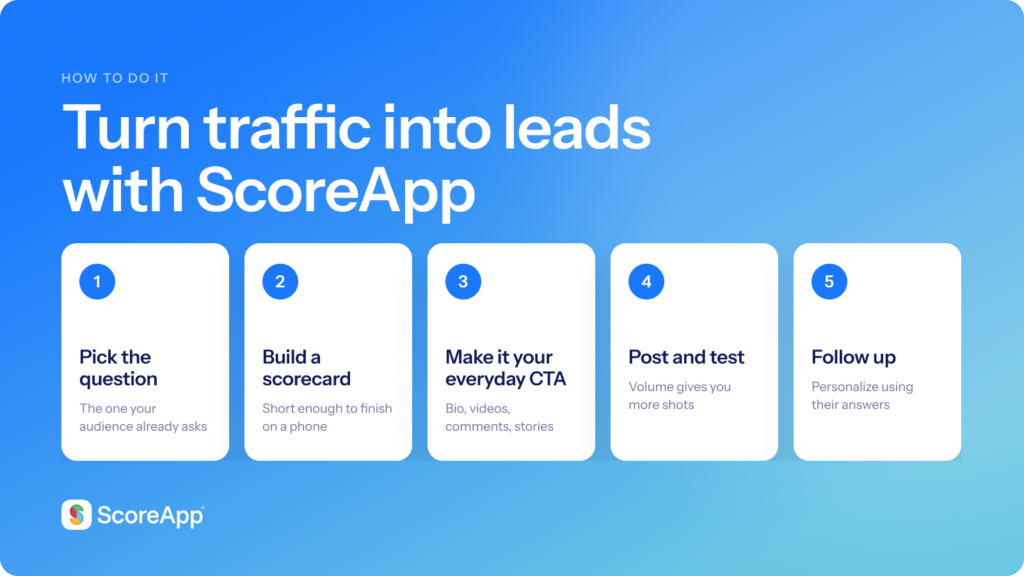
- Pick the question your audience is already asking. Look at your comments and DMs. Belle’s audience wanted to know what was holding them back, so that became the scorecard.
- Build a short scorecard around it. Keep it quick enough to finish on a phone – Belle’s average completion time was under four minutes. Our assessment templates give you a head start.
- Make it your everyday CTA. Link in bio, end of every video, pinned comment, story link. Same destination, every time.
- Post at volume and keep testing. More posts means more chances for one to break out – and every one of them already points to your scorecard.
- Follow up based on answers. Use each person’s results to personalize the next email, offer, or conversation, instead of sending everyone the same thing.
This works for any business that relies on social content – coaches, consultants, and service businesses as much as creators.
The takeaway
You can’t schedule going viral. You can decide where the attention goes when it happens. Belle had her scorecard ready, so 83 people in a single day didn’t just watch – they told her exactly where they’re at.
Build your scorecard before the spike
Create an interactive assessment your audience actually wants to take, and turn your next burst of attention into leads you can follow up with.